4.4.1Introduction: The Chameleon Chord
There is a train station in Switzerland - Brig, at the foot of the Simplon Pass - where three tunnels converge. A single platform serves trains heading to Milan, to Geneva, and to Zurich. A traveller standing on that platform has not yet chosen a destination. They are, for one suspended moment, in all three cities at once. The choice collapses only when they step onto a train.
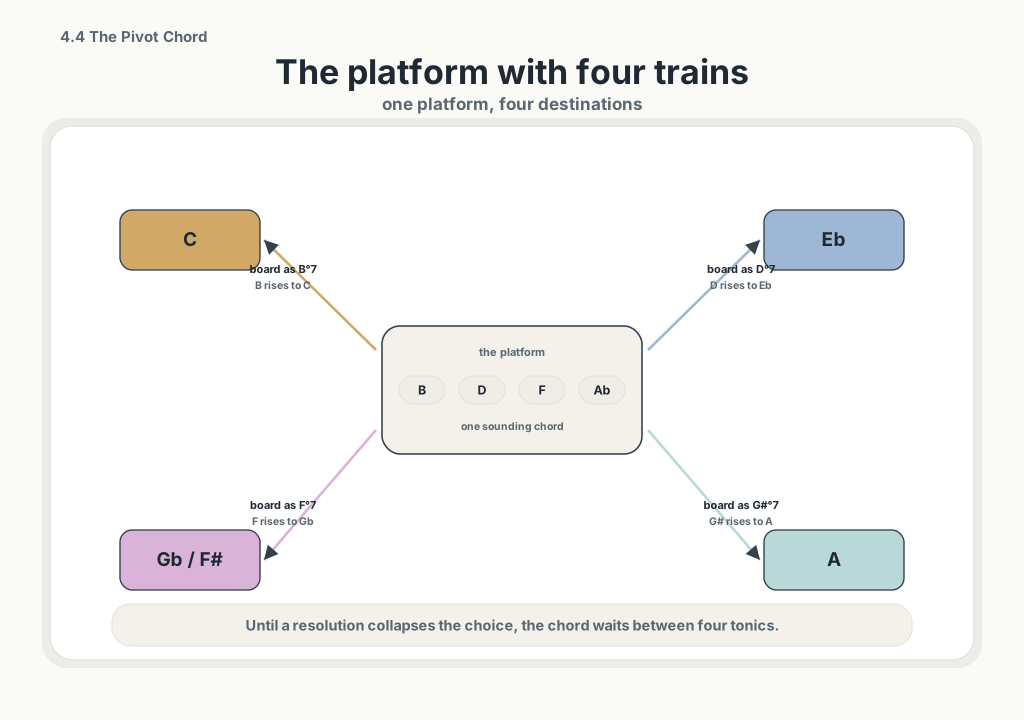
The diminished seventh chord is Brig station. It is a single sonority that serves four different keys simultaneously. A composer who arrives at a dim7 chord has not yet chosen a destination - they are suspended between four possible tonics, each a minor third apart, each equally reachable. The choice collapses only when the chord resolves. Until then, the music is everywhere and nowhere at once.
The diminished seventh chord possesses a unique property among harmonic structures: it can be heard, spelled, and resolved in multiple ways without changing a single pitch. This transformative quality makes the dim7 chord one of the most versatile and powerful tools for harmonic modulation, functioning as what theorists sometimes call a “chameleon chord.” In Chapter 3.2, we first met the diminished seventh chord as a leading-tone harmony - a concentrated coil of tension that demands resolution. We explored its use as a passing chord, an embellishing chord, and a secondary leading-tone substitute. But we only glimpsed its most remarkable property: the symmetry that allows it to belong to four keys at once. In Chapter 4.3, we saw how the German sixth chord exploits enharmonic ambiguity to bridge classical voice leading and jazz substitution. Now we turn to the diminished seventh’s version of that same trick - but where the German sixth connects two keys, the dim7 connects four.
Unlike most harmonic pivots, which shift from one key to another while maintaining a shared chord, the enharmonic dim7 operates on an entirely different principle. By reinterpreting the spelling of its constituent pitches, a single diminished seventh chord can serve as a fully functioning dominant seventh substitute in four different keys simultaneously. This chapter explores how the mathematical properties of the diminished chord create this extraordinary flexibility and how composers and songwriters exploit it to achieve dramatic harmonic shifts.
4.4.2Symmetry and Equal Division
To understand why the diminished seventh chord possesses this unusual property, we must examine its internal structure. A diminished seventh chord consists of four notes, each separated from the next by an interval of a minor third (three semitones). For example, B°7 contains the pitches B, D, F, and A♭. The distance from B to D is three semitones; from D to F, another three semitones; from F to A♭, another three semitones; and from A♭ back to B, yet another three semitones. This means that all twelve semitones of the chromatic scale divide equally into four symmetrical groups. The diminished seventh chord represents a perfect geometric division of the octave - a property shared only by the augmented triad (which divides the octave into three equal major thirds) and the whole-tone scale (which divides it into six equal whole steps). This symmetry is the key to understanding the dim7’s enharmonic flexibility.
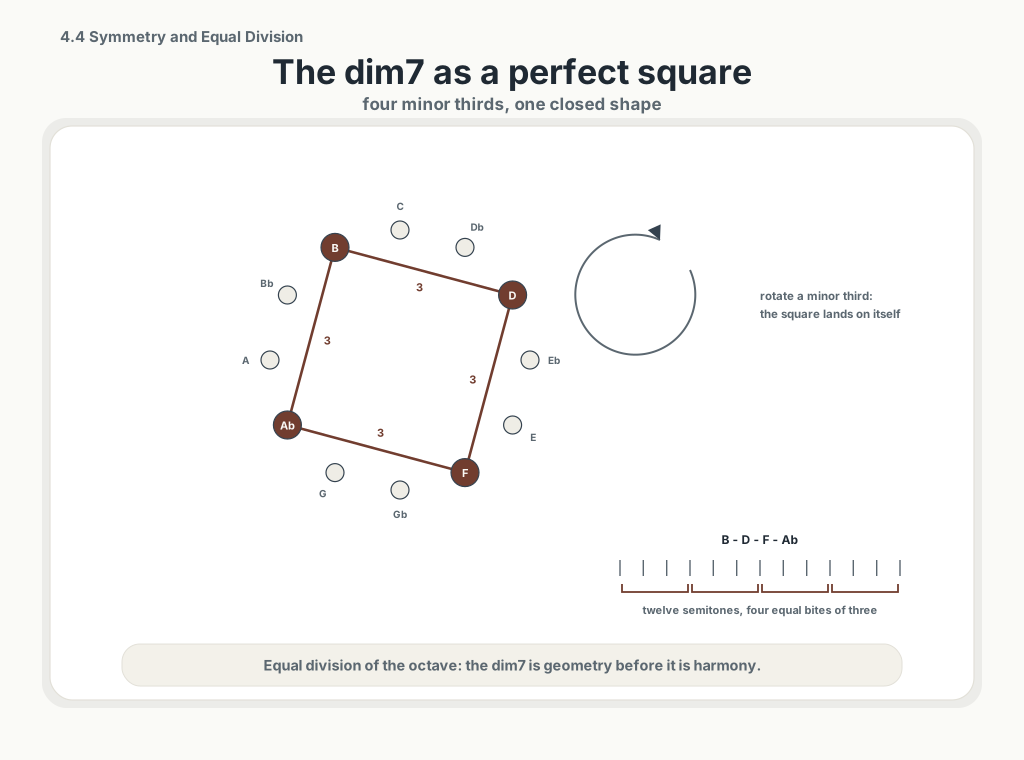
This property connects the diminished seventh to a broader family of symmetrical structures. In Chapter 4.6, we will explore how equal divisions of the octave - by major thirds (the augmented triad), by whole steps (the whole-tone scale), and by half-step/whole-step alternation (the octatonic scale) - create harmonic systems where traditional functional hierarchy dissolves. The diminished seventh is the earliest and most practical member of this family: a perfectly symmetrical object that nonetheless operates within functional tonal harmony.
4.4.3Enharmonic Reinterpretation
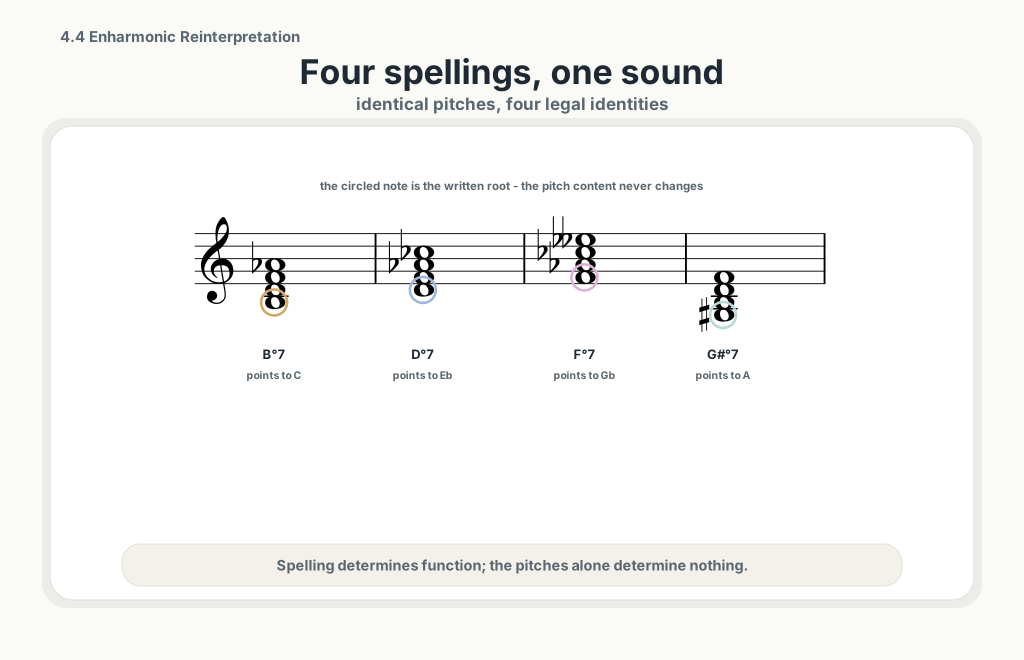
Because each pitch in a diminished seventh chord stands exactly three semitones from the next, any of these four pitches can function as the root of that same chord. Consider the pitches B, D, F, and A♭: we can spell this sonority as B°7 (root position), or D°7 (with D as root), or F°7 (with F as root), or G♯°7 (with the A♭ respelled as G♯ and taken as the root). These are not different chords in terms of actual sounding pitches - they are literally the same combination of notes - but the spelling changes fundamentally how the chord functions within a key. When we write B°7, the chord functions as a diminished seventh built on B in some harmonic context. When we spell the identical pitches as D°7, we have recontextualized the chord to function in a different harmonic environment. This enharmonic flexibility allows a single diminished sonority to “belong” to four different keys, each a minor third away from the others.
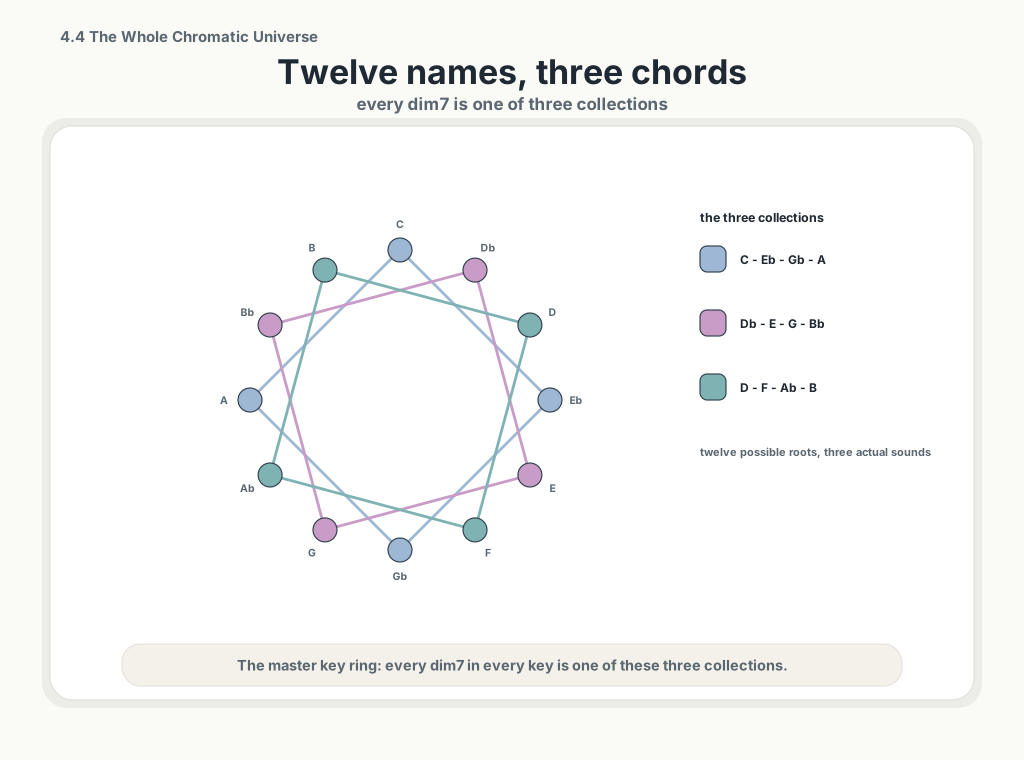
This property has a striking consequence: there are only three truly unique diminished seventh chords in the entire twelve-tone chromatic scale. Every other dim7 chord in every other key is enharmonically equivalent to one of these three collections. (For instance, C°7, E♭°7, G♭°7, and A°7 are all the same four pitches, just spelled differently.) In practical terms, a musician can arrive at a dim7 chord in one key, rename it, and resolve it into a tonality that would otherwise require a dramatic leap through harmonic space.
The Sage
“The diminished seventh chord is the only chord in tonal harmony that is truly democratic. No note has a stronger claim to be the root than any other. Every pitch is equidistant from every other pitch. In a world built on hierarchy - tonic above dominant, dominant above subdominant - the dim7 is a brief, flickering moment of perfect equality. And like all moments of perfect equality, it is profoundly unstable.”
4.4.4The Diminished 7th as Pivot Chord
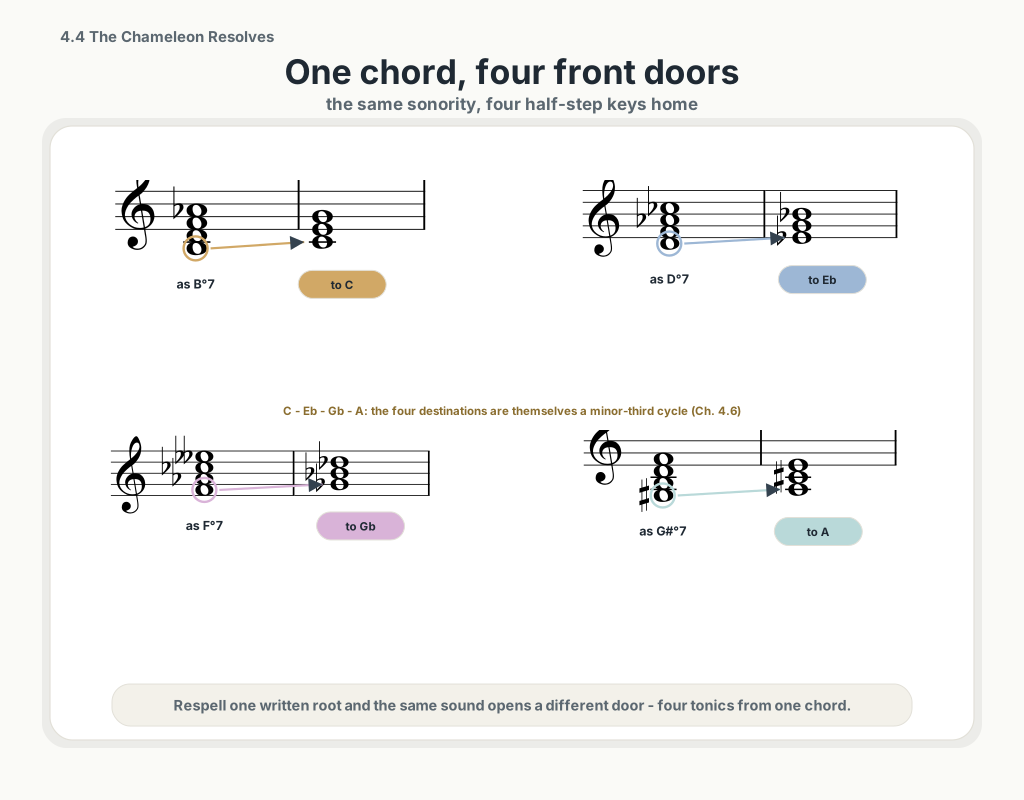
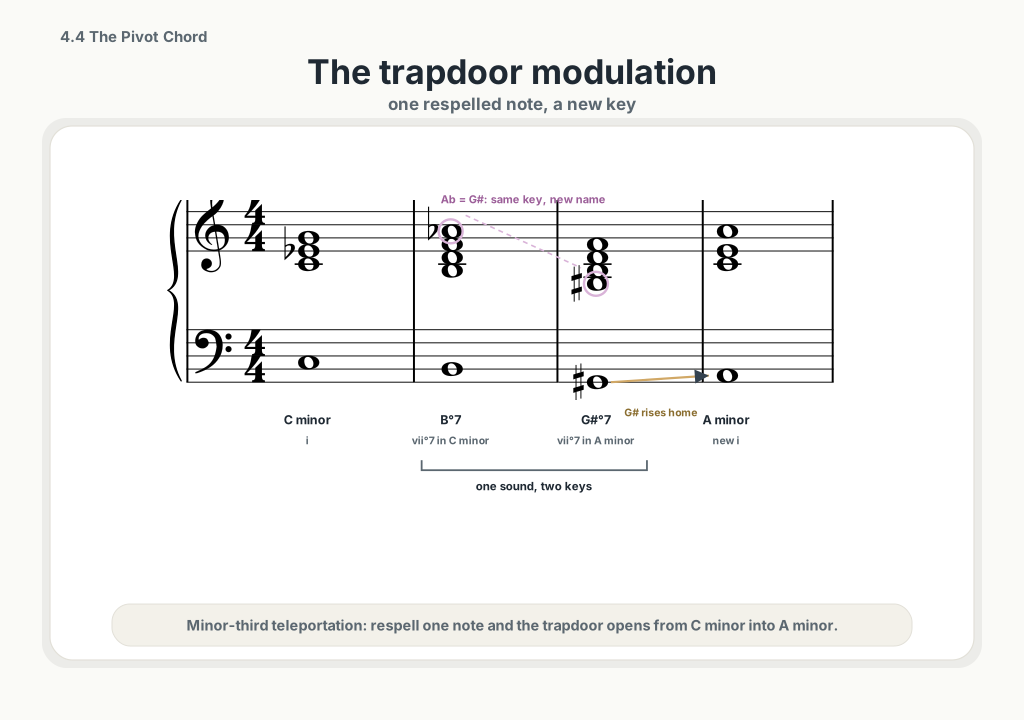
The diminished seventh chord functions as perhaps the most powerful pivot chord in music theory, precisely because of its fourfold enharmonic identity. In traditional modulation via pivot chord (which we glimpsed in Chapter 4.3 with augmented sixth chords), a composer selects a chord that exists naturally in both the original and destination keys. With a diminished seventh, however, the composer enjoys far greater freedom. A dim7 chord built on the leading tone of the starting key can be reinterpreted - simply through respelling - as the leading tone diminished seventh of a key a minor third away, a major sixth away, or a tritone away. For instance, imagine a passage in C minor that arrives on the leading-tone diminished seventh, B°7 (B, D, F, A♭). Instead of resolving it home to C, the composer respells the A♭ as G♯: the identical sonority is now G♯°7, the leading-tone seventh of A, and it resolves instead into A minor. The listener hears a dramatic modulation that sounds almost like a tonal wrench, yet from the composer’s perspective, a single chord simply changed its spelling and function. This technique appears throughout the classical tradition, particularly in the works of Beethoven and Schubert, who used dim7 pivots to achieve unexpected tonal shifts that created surprise, drama, and emotional intensity.
The Craftsman
“Here is the practical trick: if you want to modulate to a distant key and make it sound inevitable, find a diminished seventh chord that belongs to both keys. Play it. Let it hang. Then resolve it into the new key as if that were always the plan. The audience will hear a dramatic shift; they will not hear a seam. The dim7 is the trapdoor of modulation - the listener falls through it before they realize the floor has changed.”
The dim7 pivot will reappear in Chapter 4.5 (Advanced Modulation), where we will survey the full toolkit of modulation techniques - from common-chord pivots through chromatic and enharmonic strategies. The diminished seventh’s four-way pivot capability makes it the most powerful single chord in the modulator’s arsenal, capable of reaching keys that no diatonic pivot could access.
4.4.5Common-Tone Diminished 7th Chords
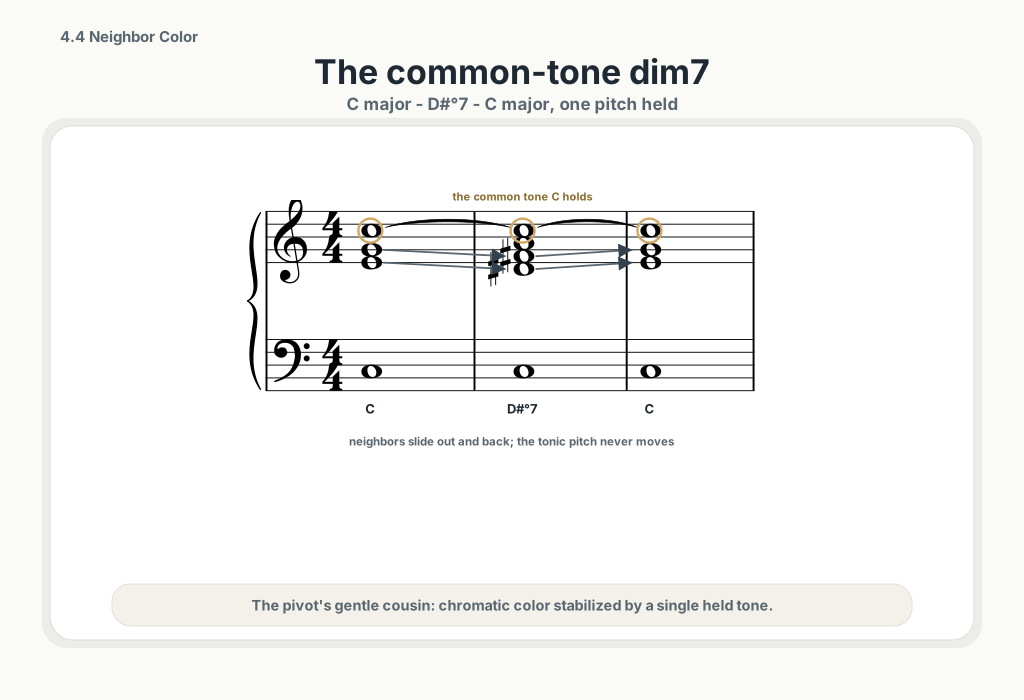
Beyond its role as a pivot chord for distant modulation, the diminished seventh also appears as a diatonic harmony - or more precisely, a chromatic embellishment - that shares one or more pitches with the surrounding harmonic context. A common-tone diminished 7th chord is built on a scale degree and is approached and left by resolution to a chord that shares at least one pitch with the dim7. For example, a C major triad followed by a D♯°7 chord (D♯, F♯, A, C - sharing the tonic pitch C) followed by a C major triad creates a progression that uses the D♯°7 as an embellishment, exploiting the diminished chord’s inherent tension to create temporary instability before returning to the original harmony. This technique is more local and less disruptive than the enharmonic pivot discussed above, yet it demonstrates the dim7’s utility as a flexible harmonic element. Common-tone diminished sevenths often appear as passing sonorities or neighbour chords, adding colour and movement to an otherwise static harmonic progression. They can also serve as secondary diminished sevenths (dim7/ii, dim7/iii, etc.), extending the chromatic voice-leading possibilities available to a composer.
4.4.6Applications in Pop and Rock
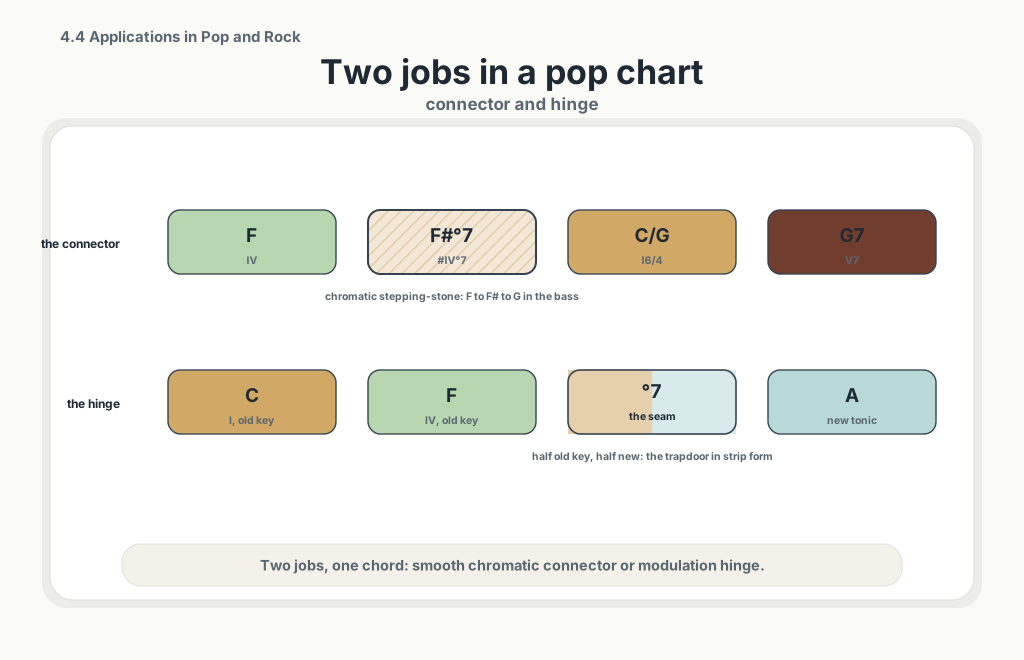
The enharmonic flexibility of the diminished seventh has not remained confined to classical music. Modern popular music and rock have discovered the dim7’s value as a tool for unexpected harmonic shifts and tonal colour. In The Champs’ Tequila, a playful single-note ostinato riff is supported by dim7 chords that create an exotic, somewhat unsettling harmonic environment - perfect for the song’s somewhat novelty character. More dramatically, songs such as My Chemical Romance’s Helena employ dim7 chords to heighten emotional intensity, using the chord’s inherent dissonance to underscore themes of loss and darkness. Paul Young’s Every Time You Go Away uses a dim7 chord as a pivot within the song’s modulation scheme, allowing the progression to shift keys in a way that feels both unexpected and inevitable. These examples show that the theoretical sophistication of the diminished seventh - its symmetrical structure and enharmonic identity - can be harnessed for emotional and textural purposes in contemporary music, where harmonic tension and resolution operate on a more intuitive level than in strict classical analysis.
Prof. Krankenhorn
“I will grant that the enharmonic pivot via diminished seventh chord is one of the great achievements of tonal theory. That it appears in a song called ‘Helena’ by a band called ‘My Chemical Romance’ is a coincidence I choose not to examine too closely.”
The dim7’s enharmonic flexibility also connects to the omnibus progressions we will explore in Chapter 4.9 - extended chromatic voice-leading sequences where diminished seventh chords appear as waypoints along a longer chromatic journey. Where the pivot technique uses the dim7 as a sudden gear-shift, the omnibus uses it as a stepping stone in a slow chromatic descent or ascent.
4.4.7Summary
The diminished seventh chord stands apart from other harmonic structures because of its unique symmetrical properties. By dividing the octave into four equal minor thirds, it creates a sonority that can be spelled and understood in four different ways without changing a single pitch. This enharmonic flexibility makes the dim7 an extraordinarily powerful pivot chord, allowing composers to modulate to distant keys in ways that would be impossible using traditional pivot-chord techniques. Beyond its role in large-scale modulation, the common-tone diminished seventh serves as a colourful, tension-filled embellishment that can heighten emotional expression. From classical works by Beethoven and Schubert to contemporary rock and pop, the diminished seventh remains one of music’s most chameleon-like harmonies, equally at home in a Romantic symphony and a twenty-first-century pop song.
The diminished seventh’s ability to resolve convincingly into four different keys reinforces a central principle of the Closure Thesis (Chapter 2.3): closure is not a single destination but a spectrum of possible arrivals. The same chord, the same four pitches, can deliver the listener to C major or E♭ major or F♯ major or A major - and in each case, the arrival feels complete. The closural force is not in the chord itself but in the voice-leading context that surrounds it. Function, as we keep discovering, is not a property of individual chords but a relationship between chords.
Understanding the dim7’s structure and applications deepens appreciation for harmonic sophistication across centuries and genres.
The word enharmonic comes from Greek enharmonios - “in harmony,” or more precisely, “within the tuning system.” In ancient Greek music theory, the enharmonic genus was the most refined and subtle of the three tuning systems, using quarter-tones that most listeners could barely distinguish. The idea that two notes could be “the same but different” - functionally identical yet theoretically distinct - has been with us since the Greeks. The diminished seventh chord is the modern inheritor of that ancient insight: a chord where spelling is everything, where the same four pitches become four different chords depending on which name you give them. In harmony, as in life, identity is a matter of context.