3.5.1The Magic of Thirds
There is a moment in every magic show - the one the audience never sees - when the magician’s left hand does something extraordinary while the right hand waves a silk handkerchief. The trick works because the audience watches the handkerchief. They follow the obvious motion and miss the real one.
Chromatic mediants are harmony’s left hand. While the ear has been trained to follow motion by fifths and fourths - the obvious, powerful gestures of dominant and subdominant function - motion by thirds slips through almost unnoticed. Two chords a third apart share a common tone, and that shared note acts like the magician’s patter: it holds the ear’s attention while the other two voices shift chromatically beneath it. The result is a harmonic sleight of hand - a sudden change of colour that feels both surprising and inevitable.
We first encountered the power of thirds in Chapter 1.5, where we learned that the third is the interval that defines a chord’s quality - the difference between major and minor, between brightness and shadow. In Chapter 3.4, we saw how borrowing chords from the parallel minor (particularly ♭III, ♭VI, and ♭VII) opens new harmonic territory within a single key. Now we examine a broader phenomenon: what happens when any two major chords a third apart sit side by side, regardless of whether either one ‘belongs’ to the home key.
When chords move by a third (up or down), they are in a mediant relationship. If we are in C major, the diatonic mediant chords are E minor (iii) and A minor (vi). Moving from C major to A minor feels smooth and logical because they share two notes (C and E). But what happens when we alter that relationship chromatically? What if, instead of moving from C major to A minor, we move from C major to A major?
This is the chromatic mediant. It is one of the most powerful tools in the pop and rock harmonic toolkit, used to create sudden shifts in colour, cinematic lifts, and ambiguous, floating chord loops.
3.5.2Defining the Chromatic Mediant
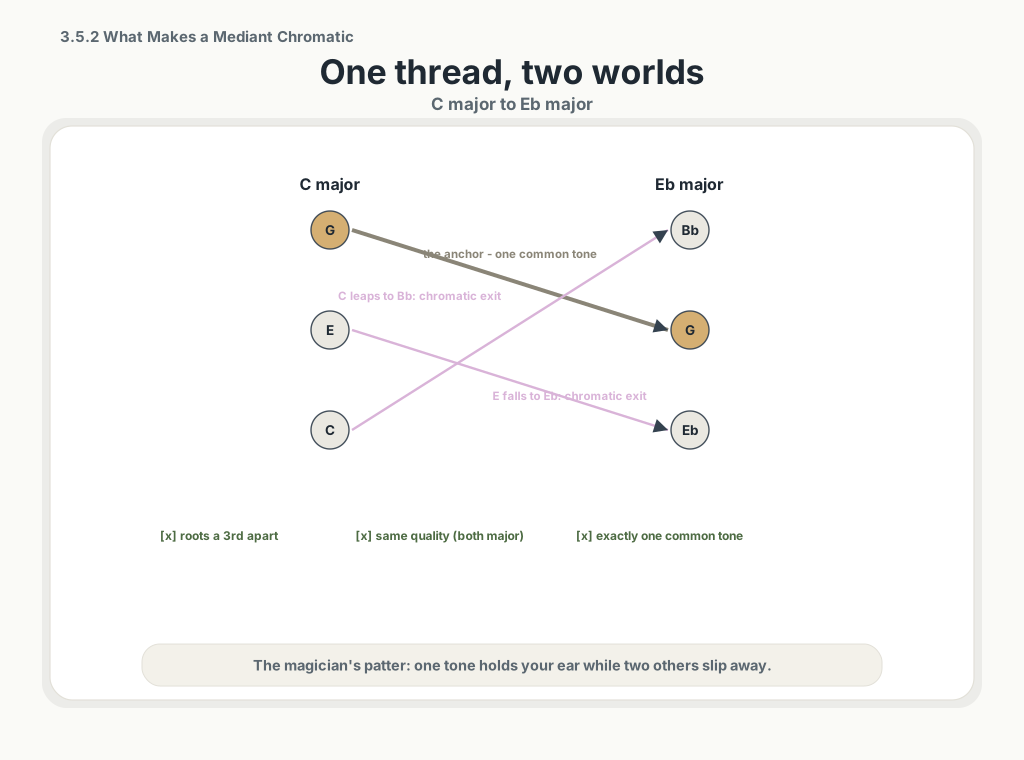
A chromatic mediant relationship exists between two chords that meet three criteria: 1. Their roots are a major or minor third apart. 2. They share the same chord quality (both major, or both minor). 3. They share exactly one common tone.
For example, consider C major (C–E–G) and E♭ major (E♭–G–B♭). Their roots are a minor third apart. They are both major chords. And they share exactly one common tone: the note G.
Because they share a common tone, the progression feels connected. But because the other two notes require chromatic alteration (C moves to B♭; E moves to E♭), the progression feels surprising and exotic. It is a harmonic sleight of hand - the common tone anchors the ear while the rest of the chord shifts into a new chromatic space.
The Three Degrees of Chromatic Mediants
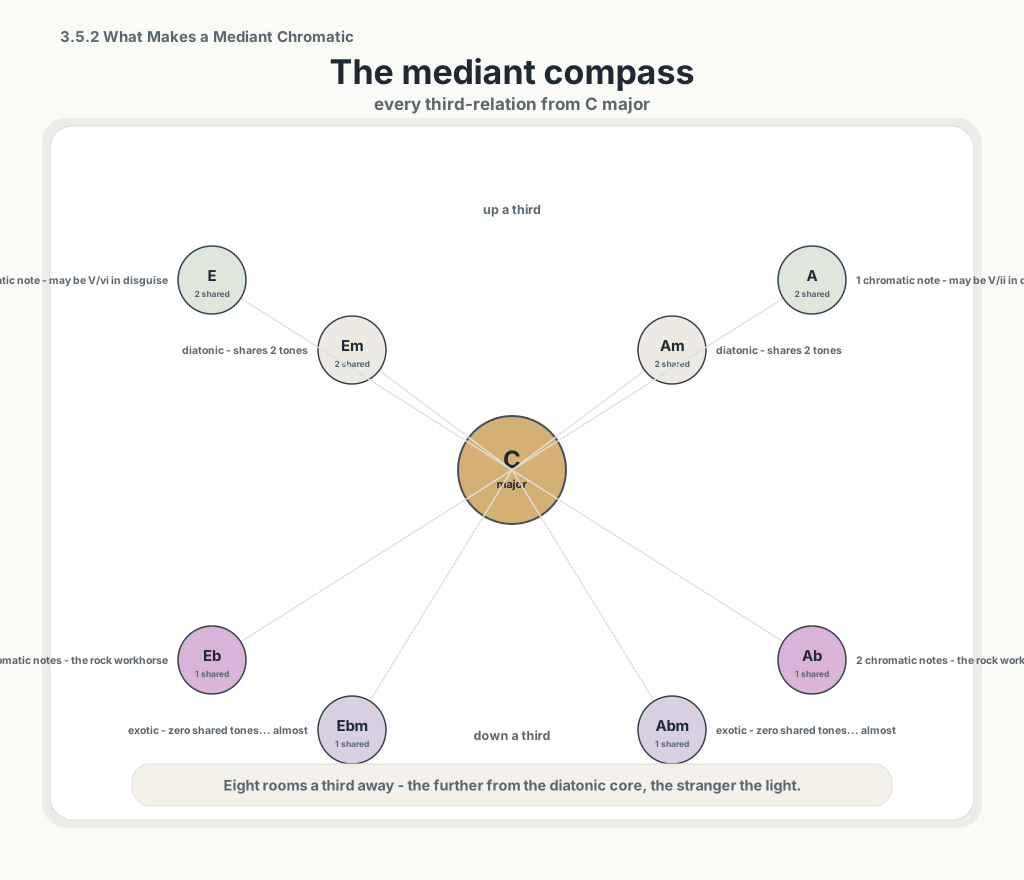
Chromatic mediants can be categorized by how far they depart from the diatonic key:
1st Degree Chromatic Mediants (III and VI): These are built on diatonic roots (the 3rd and 6th scale degrees) but their quality is changed to major. In C major, these are E major and A major. They contain one chromatic note (the raised 3rd of the chord). Note: These chords often function as secondary dominants (V/vi and V/ii). A III chord is only a true chromatic mediant if it does not resolve like a dominant.
2nd Degree Chromatic Mediants (♭III and ♭VI): These are built on chromatically lowered roots and contain two chromatic notes. In C major, these are E♭ major and A♭ major. These are the rock and pop workhorses, often borrowed from the parallel minor.
3rd Degree Chromatic Mediants (♭iii and ♭vi): These are rare, exotic chords built on lowered roots with a minor quality. In C major, these are E♭ minor and A♭ minor. All three notes in these chords are non-diatonic.
The fact that chromatic mediants divide the octave into equal major or minor thirds will take on structural significance in Chapter 4.6 (Equal Division of the Octave), where we will see how symmetrical divisions of the octave generate entire harmonic systems - whole-tone, octatonic, and hexatonic - that challenge the asymmetrical logic of diatonic tonality. Chromatic mediants are, in a sense, the first glimpse of a symmetrical harmonic world lurking beneath the surface of tonal music.
The Sage
“The chromatic mediant is the chord that should not work. It shares almost nothing with its neighbour - one common tone out of three. And yet that single shared pitch is enough. It is a lesson in connection: sometimes, the thinnest thread is the strongest.”
3.5.3Mediant Mixture in Rock Melody
The chromatic mediant is not just a harmonic phenomenon; it is deeply embedded in the melodic grammar of rock and pop music. This manifests as mediant mixture - the flexible, context-sensitive use of both the major third (scale degree 3) and the minor third (scale degree ♭3) within the same song, often within the same phrase.
Classical theory struggles to explain this, as no conventional major or minor scale contains both 3 and ♭3. However, in rock, this mixture is the standard language. The choice between the two notes is governed by three interacting factors:
Melodic Tendency (Pentatonic Logic): Rock melodies are heavily influenced by pentatonic scales. In the major pentatonic, 3 is adjacent to 5. In the minor pentatonic, ♭3 is adjacent to 1. Therefore, singers naturally gravitate toward 3 when approaching the fifth of the scale (often the high point of a phrase), and toward ♭3 when descending to the tonic.
Harmony: The melody often matches the underlying chord. For example, 3 is used over the I chord, but ♭3 is almost universally preferred over the IV chord, creating a bluesy dominant-seventh sound.
Expression: Because 3 and ♭3 are the primary indicators of major and minor, they act as powerful emotional switches. A sudden shift to 3 can signal joy or triumph, while a shift to ♭3 can signal longing or sorrow.
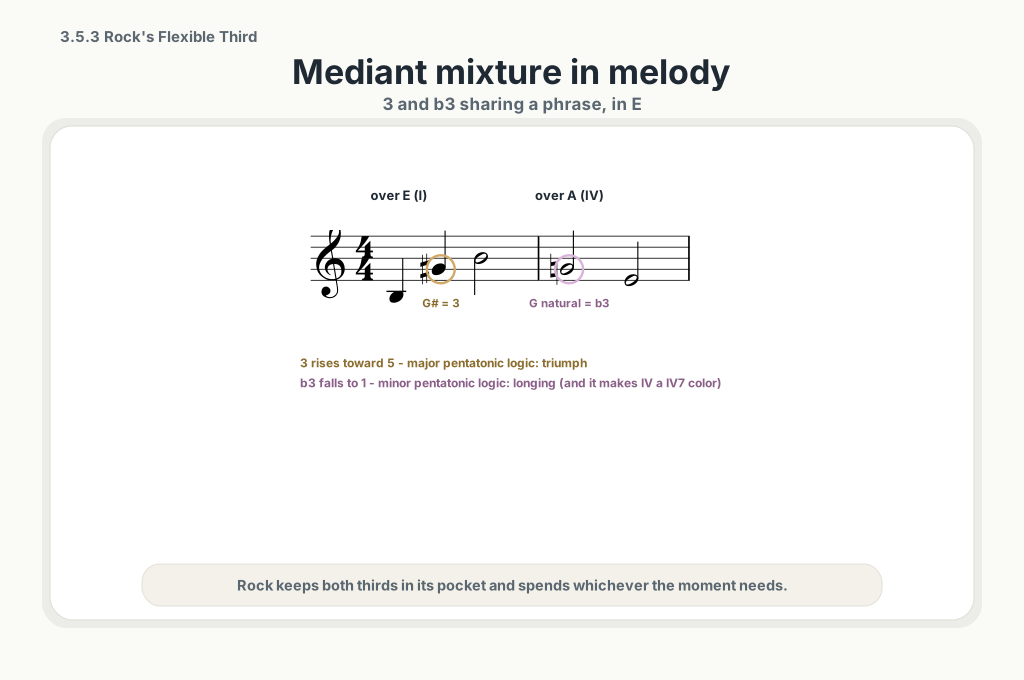
Example: The Rolling Stones’ “(I Can’t Get No) Satisfaction” is the textbook example of mediant mixture. The melody uses the major third (G♯) over the E major tonic in the verse, but switches to the minor third (G♮) over the A major (IV) chord. In the chorus, the minor third is used even over the tonic chord, creating the song’s signature blues-rock tension.
The Craftsman
“Here is a practical rule of thumb: if you see a III chord in a major key (a major triad on the third degree), ask yourself one question. Does it resolve down a fifth? If yes, it is a secondary dominant (V/vi) doing its day job. If it goes anywhere else - sideways, upward, back to the tonic - it is a chromatic mediant, and it is there for colour, not function. The diagnosis is in the destination.”
3.5.4The “Onion Shuffle” and Rock Harmony
In rock and pop, the ♭III chord is so ubiquitous that it forms the basis of its own harmonic grammar. The progression I – ♭III – IV – I (e.g., E – G – A – E) is a foundational rock loop. It is sometimes called the “Onion Shuffle,” named after Booker T. & the M.G.’s classic instrumental Green Onions.
In Green Onions, the progression moves from F to A♭ to B♭. The move from F major to A♭ major is a classic chromatic mediant relationship. The A♭ major chord does not function as a dominant; it does not pull the listener toward a new key. Instead, it acts as a colouristic stepping stone, harmonizing the minor pentatonic scale (1, ♭3, 4).
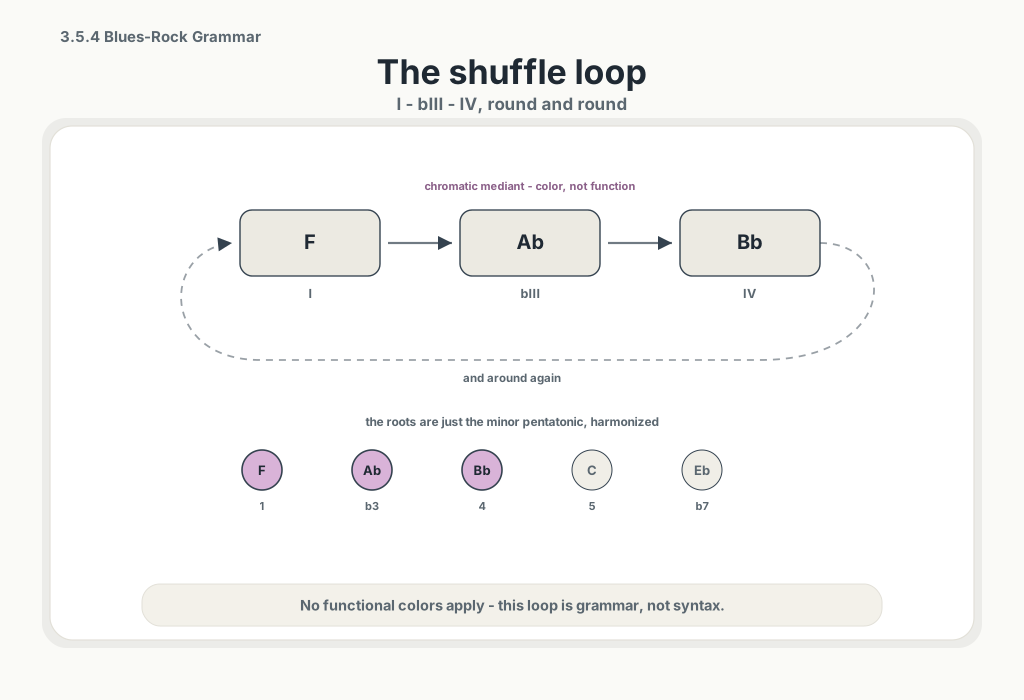
This reveals a crucial point about rock harmony: in blues-based and pentatonic systems, chromatic mediants are not “rule-breaking” deviations. They are the standard grammar. Nirvana’s Smells Like Teen Spirit (E – A – G – C) relies entirely on a web of major chords moving by fourths and chromatic thirds.
Example: The Beatles’ Nowhere Man is a brilliant pop application of the chromatic mediant. In the key of E major, the bridge begins on a G♯ minor chord (iii), which moves to an A major chord (IV). But the verse features a sudden shift to a G major chord (♭III). This chromatic mediant provides a startling, colourful lift that perfectly matches the surreal lyrical imagery.
3.5.5Chromatic Mediants vs. Secondary Dominants
The most common point of confusion when analyzing chromatic mediants is distinguishing them from secondary dominants.
If you see an E major chord in the key of C major, you must look at what happens next.
- If the E major chord resolves to A minor, it is functioning as a secondary dominant (V/vi). It is creating tension and resolving it functionally.
- If the E major chord moves to F major, or loops back to C major, it is functioning as a chromatic mediant colour chord. It is providing a harmonic shift without a functional resolution.
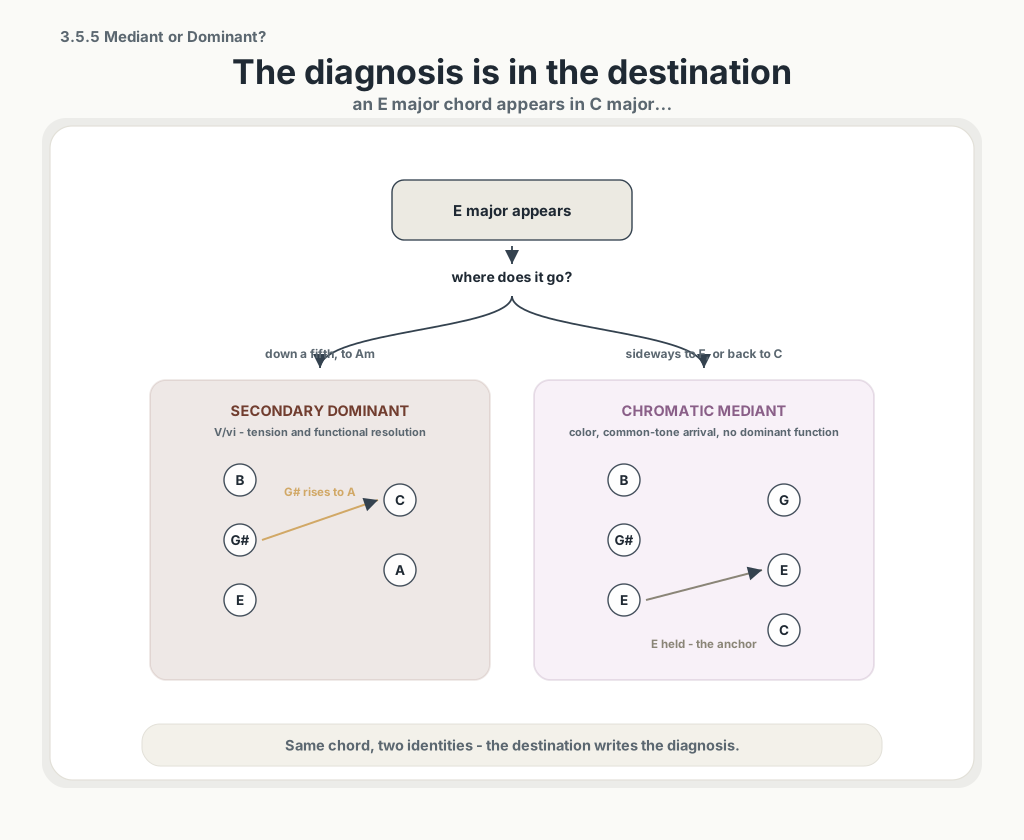
This distinction matters for the Closure Thesis introduced in Chapter 2.3. A secondary dominant intensifies closure by multiplying the V→I pull (as we saw in Chapter 3.1). A chromatic mediant, by contrast, provides a sense of harmonic arrival without dominant function - it achieves its effect through colour and common-tone connection rather than tension and resolution. In the language of graded closure, chromatic mediants occupy a fascinating middle ground: they are not functionally closed (no dominant motion), yet they are not open either (the common tone anchors the ear). They are a kind of shimmering, suspended arrival.
Exercise: Listen to the verse of Radiohead’s Karma Police. The progression moves Am – D – Em – G – Am – F – Em – G – Am – D – G – C – C/B – Am – Bm – D. The move from G major to B minor is a diatonic mediant. But later, the song uses chromatic mediant shifts to create its distinct sense of floating unease.
3.5.6Line Clichés
While chromatic mediants involve moving the entire chord structure, there is another technique that creates chromatic interest by moving only a single note while the rest of the chord remains stationary. This is known as a line cliché.
A line cliché is a stepwise descending or ascending line (often chromatic) that moves against a single stationary chord. It is a powerful tool for creating a sense of forward momentum when a progression lingers on a single chord for several bars.
The Descending Minor Cliché
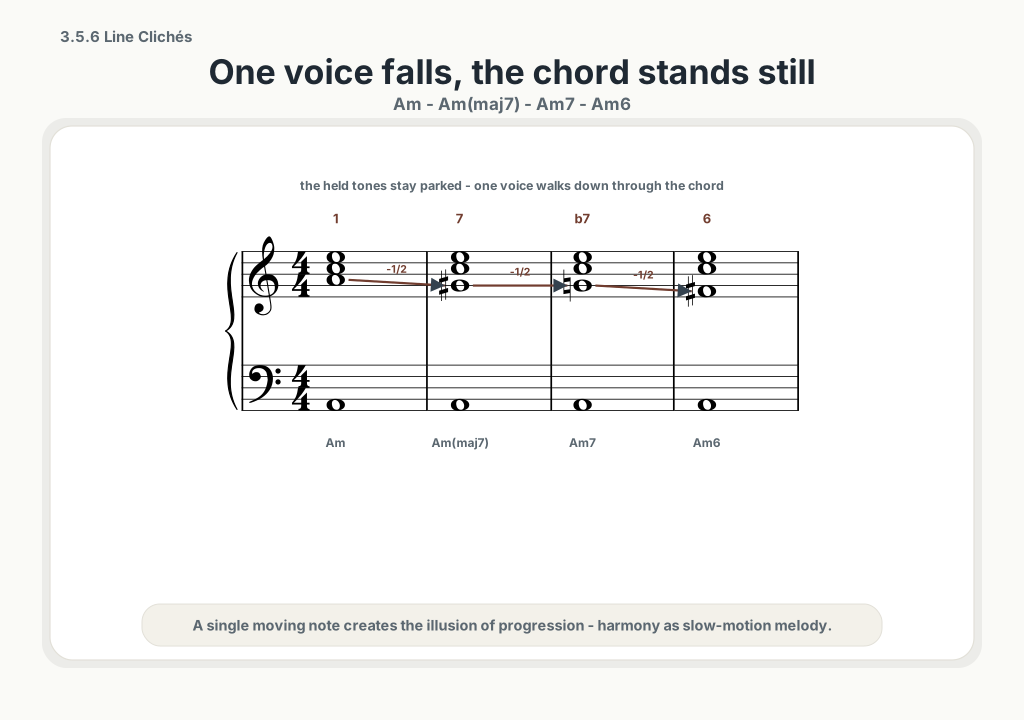
The most famous line cliché occurs over a minor tonic chord. The chord root remains A while a single voice descends chromatically: 1 → 7 → ♭7 → 6. In A minor, the chords would be written as: Am – Am(maj7) – Am7 – Am6 The bass line (or an inner voice) plays: A → G♯ → G♮ → F♯
This progression is the harmonic engine of the 1937 jazz standard “My Funny Valentine.” It is also the iconic opening of Led Zeppelin’s Stairway to Heaven, where the descending chromatic line is played on the guitar beneath the minor triad. The Beatles used it in the bridge of Michelle, and it forms the verse of the James Bond theme.
Prof. Krankenhorn
“The descending chromatic bass line in minor is arguably the most elegant contrapuntal device in the pop repertoire. I say this with great reluctance, but if one must concede a point to popular music, it would be here. The voice leading in ‘Stairway to Heaven’ is - I will not say ‘beautiful,’ but - ‘structurally competent.’”
The Jester
“That’s the nicest thing you’ve ever said, Professor. I’m framing it.”
The Ascending Augmented Cliché
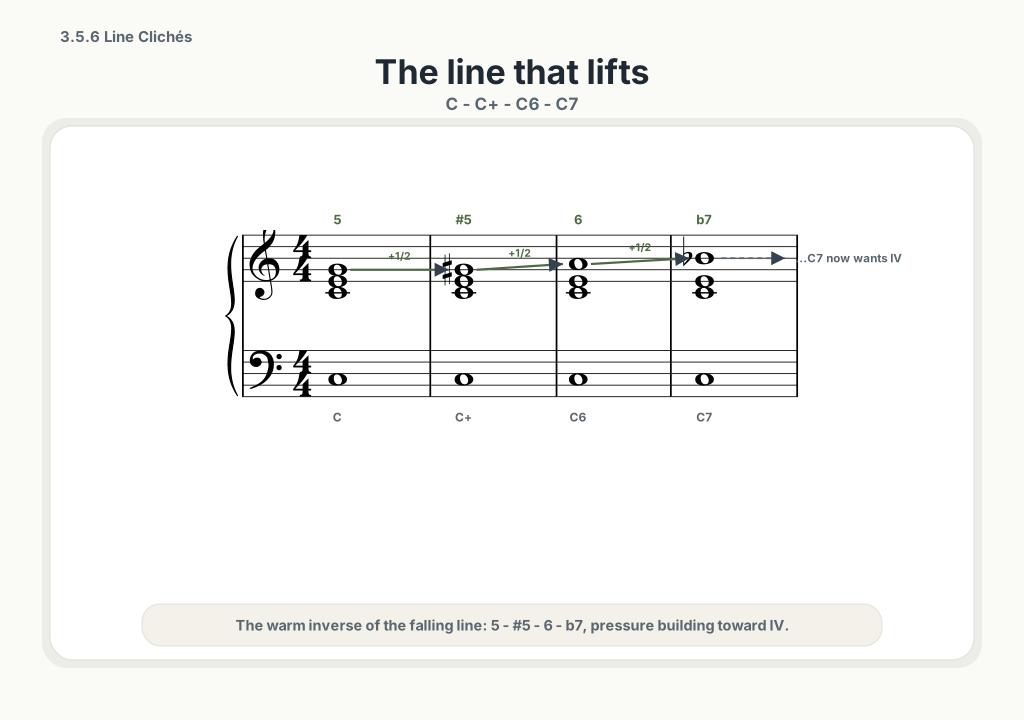
Line clichés can also ascend, often over a major chord. The 5th of the chord moves up chromatically: 5 → ♯5 → 6 → ♭7. In C major, the chords would be written as: C – C+ – C6 – C7 The moving voice plays: G → G♯ → A → B♭
This creates an ascending augmented progression. It is frequently used to build tension leading into a chorus. Whitney Houston’s The Greatest Love of All uses this exact progression in its opening verse, creating a sense of lifting and expanding harmony over a static root.
The line cliché remains a powerful tool in contemporary production. Arctic Monkeys’ Do I Wanna Know? opens with a descending minor cliché that sets its brooding, noir-ish tone. In hip-hop, Kanye West’s ‘808s & Heartbreak’ era drew heavily on descending chromatic inner voices to create its signature cold, melancholic atmosphere. And in Latin pop, the descending minor cliché is a staple of bolero and bossa nova - Antonio Carlos Jobim’s How Insensitive is built entirely on the Am–Am(maj7)–Am7–Am6 descent.
3.5.7Descending Diatonic Bass Lines
A broader application of the line cliché concept is the descending diatonic bass line. Instead of moving chromatically within a single chord, the bass walks down the major scale (8 → 7 → 6 → 5) while the chords change above it.
In C major, this often looks like: C – C/B – Am – C/G The bass plays: C → B → A → G
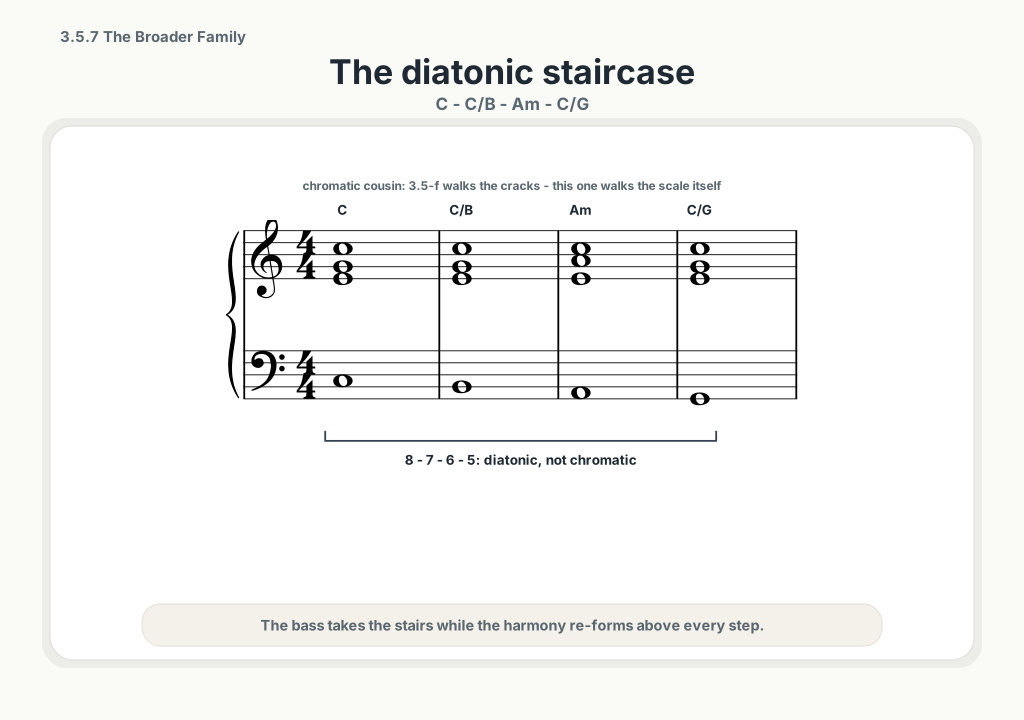
This creates a romantic, melancholic mood. It is the structural foundation of “Mr. Bojangles,” Procol Harum’s A Whiter Shade of Pale, and Billy Joel’s Piano Man. Like the chromatic mediant, the descending bass line provides a smooth, logical thread that guides the ear through a complex harmonic landscape.
The Traveller
“The descending bass line is one of the oldest devices in Western music. It was old when Purcell used it in ‘Dido’s Lament’ in 1689. It was old when Procol Harum borrowed Purcell’s trick in 1967. And it is old now, when a seventeen-year-old hears it in a TikTok mashup and feels, without knowing why, a wave of melancholy wash over them. Some musical gestures are so deeply embedded in our collective memory that they work before the conscious mind has time to analyze them.”
The chromatic and diatonic bass lines of this chapter share a deep kinship with the omnibus progressions we will encounter in Chapter 4.9 - extended chromatic voice-leading patterns where stepwise motion in one or more voices generates an entire harmonic sequence. The line cliché is the omnibus in miniature: a single moving voice creating the illusion of harmonic change over a stationary foundation.
Chromatic mediants and line clichés share a secret: they both prove that chromatic motion does not require functional explanation. A chord can move to another chord a third away simply because the common tone makes the journey smooth. A bass line can descend simply because gravity is beautiful. Not everything in harmony needs to be going somewhere. Sometimes the journey itself - the shimmer, the slide, the slow chromatic descent - is the destination.