1.9.1What Is a Triad?
In the last chapter, we heard what two notes can do when fused by distortion into a wall of sound. Now we add the third note back - and with it, everything changes.
A triad is a three-note chord built by stacking two intervals of a third on top of each other. The word comes from the Greek trias, meaning “group of three,” and it is the fundamental unit of Western harmony - the smallest structure that produces what most listeners would call a “chord.” Power chords are impressive, but they are ambiguous. Triads commit. They declare themselves. They tell you something specific about the emotional world you are entering.
Every triad has three members, and each one has a job.
The root is the foundation - the note that gives the chord its name and its identity. When someone says “a C chord,” the root is C. Everything else is measured from it.
The third is the character. It sits a third above the root, and it is the single most important note in determining how the chord feels. A major third (four semitones above the root) makes the chord bright, settled, stable. A minor third (three semitones above the root) makes it darker, more complex, tinged with something that resists easy description. The difference is one half step - one semitone - and yet it changes the emotional temperature of the entire sound. If you remember one thing from this chapter, remember this: the third is where the feeling lives.
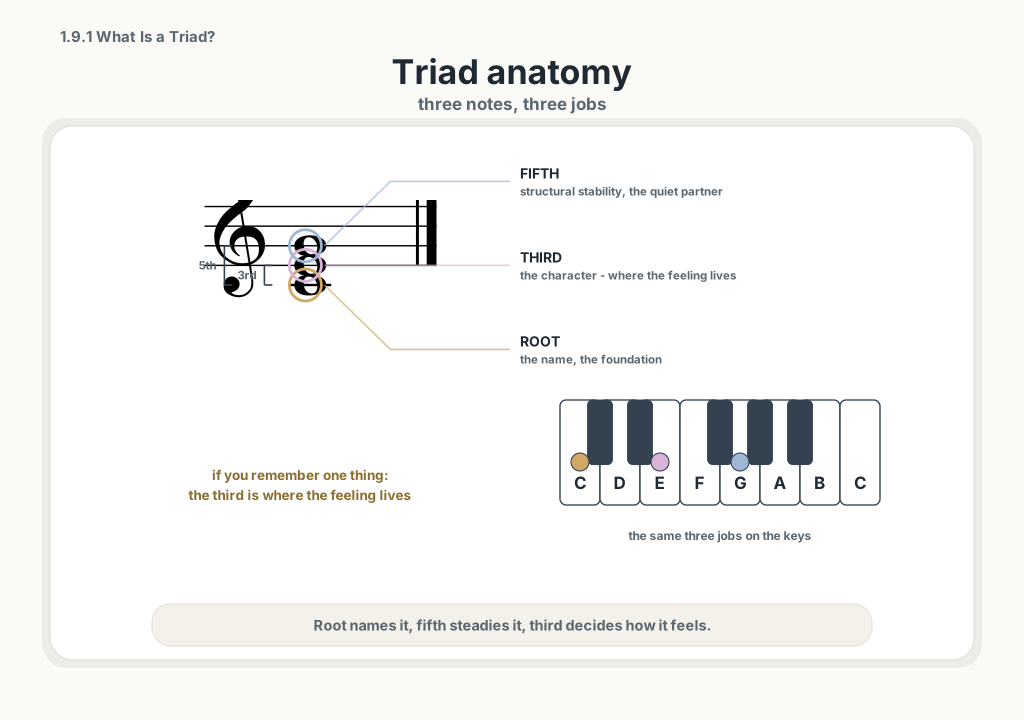
The fifth sits a fifth above the root and provides structural stability - the same open, resonant interval we heard in the power chord. It solidifies the chord’s identity without adding emotional colour. In fact, when musicians need to thin out a voicing, the fifth is usually the first note they drop, because the root and third are doing the essential work. The fifth is the quiet partner. Present, supportive, rarely noticed until it is absent.
1.9.2The Four Types of Triads
Since a triad is two stacked thirds, and each third can be either major (four semitones) or minor (three semitones), there are exactly four possible combinations. These four combinations produce the four qualities of triad, and each has a distinct sonic character.
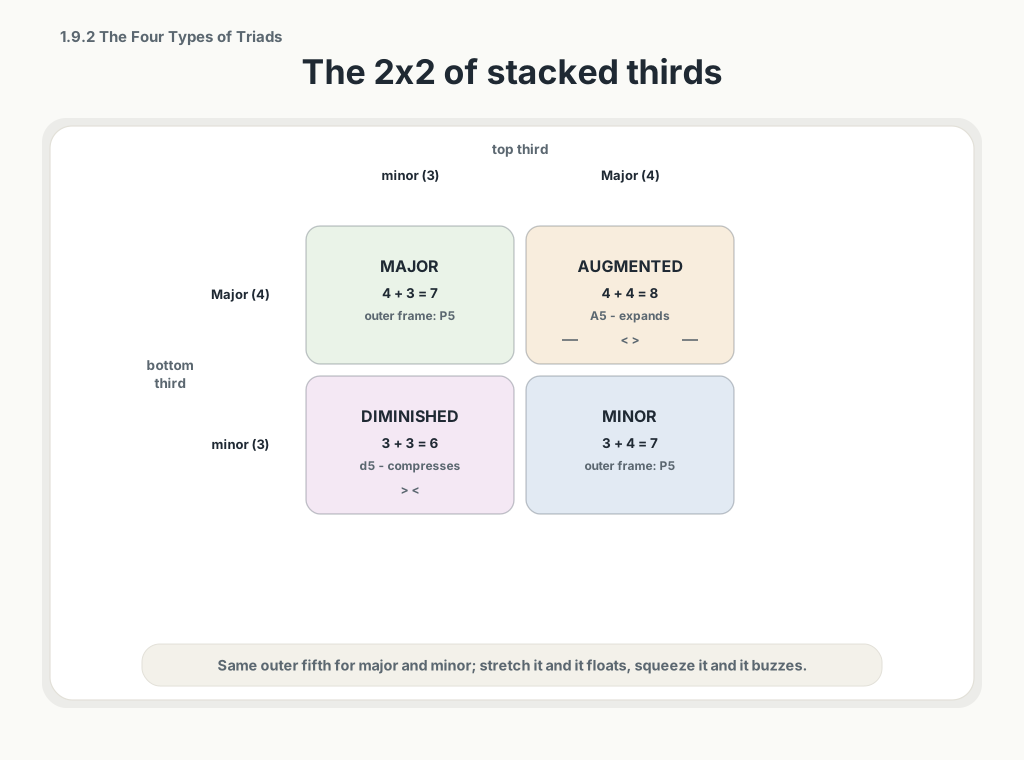
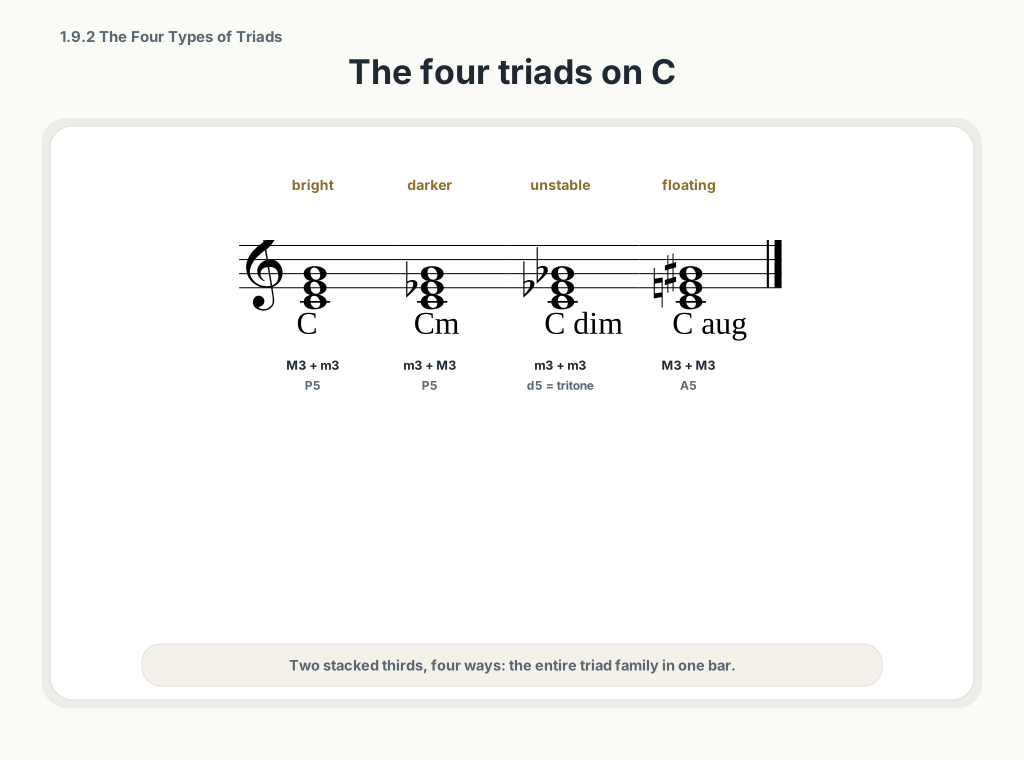
The major triad stacks a major third on the bottom and a minor third on top. The distance from root to fifth is a perfect fifth - the same stable, resonant interval we know from the power chord. The major triad sounds bright, resolved, complete. It is the I chord at the end of a hymn, the opening strum of Let It Be, the sound of arrival, of things being where they should be. Build one on C: C – E – G.
The minor triad reverses the stack: minor third on the bottom, major third on top. The root-to-fifth distance is still a perfect fifth - the outer frame is unchanged - but the interior is shifted by one semitone, and that is enough to transform the entire character. The minor triad sounds darker, more introspective, carrying a weight that the major triad does not. It is not “sad” in any simple sense - minor chords can sound beautiful, mysterious, powerful, defiant - but it is undeniably different. Build one on C: C – E♭ – G.
The diminished triad stacks two minor thirds. The root-to-fifth distance is now a diminished fifth - a tritone, that restless interval we met in Chapter 5. The result is a chord that sounds tense, compressed, unstable, as though the notes are pressing inward against each other. The diminished triad wants to move. It leans. It craves resolution. It is a musical question mark - a sound that insists something must happen next. Build one on C: C – E♭ – G♭.
The augmented triad stacks two major thirds. The root-to-fifth distance is an augmented fifth - stretched past the perfect fifth by one half step. Where the diminished triad compresses, the augmented triad expands. It sounds floating, dreamlike, slightly uncanny, as though the chord is reaching outward and has not quite found what it is reaching for. It appears less frequently than the other three, but when it does - a passing moment in a Beatles song, a shimmer in a Radiohead transition - its strangeness is unmistakable. Build one on C: C – E – G♯.
These four triads underlie a vast share of the tertian harmony in this book; other families, including power, sus, quartal, and cluster sonorities, organize pitches differently. They are core atoms of tertian harmony, not the entire harmonic world.
1.9.3Sus4 and Sus2 Chords
There is one more family of three-note structures we need to meet before leaving this chapter - and they occupy a fascinating middle ground between the harmonic commitment of a triad and the ambiguity of a power chord.
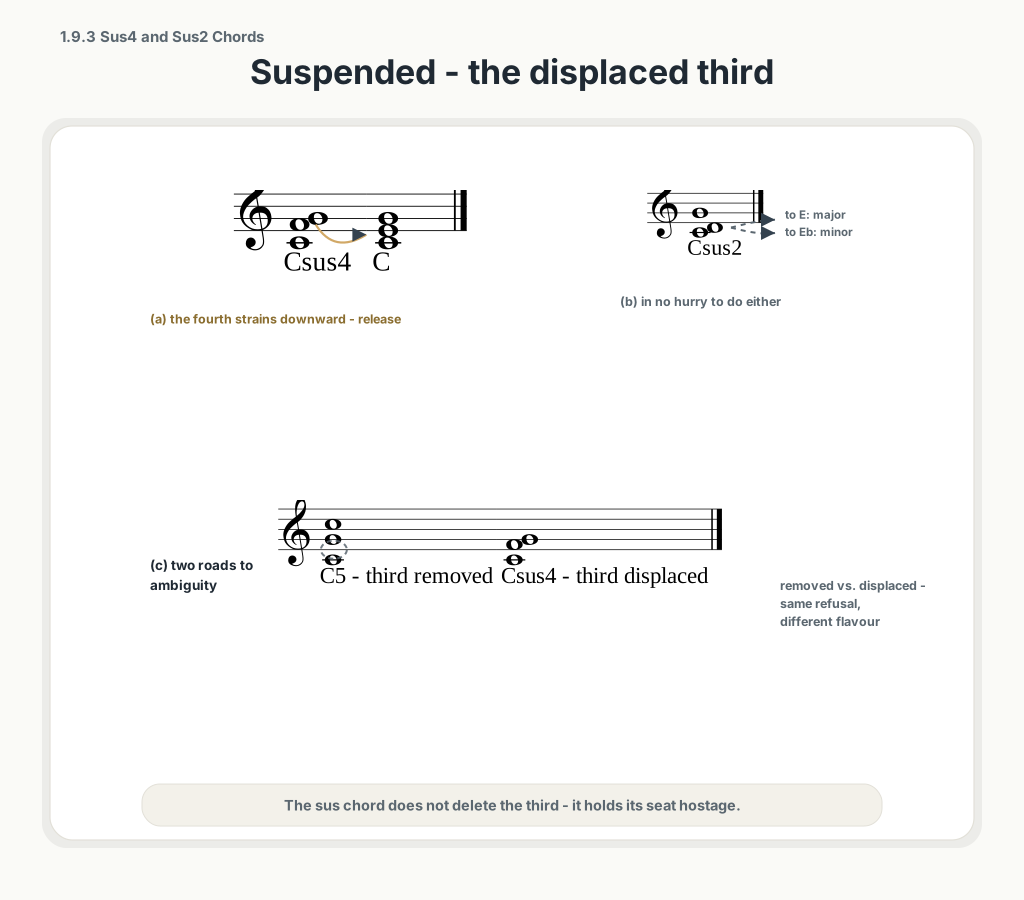
A suspended chord replaces the third with a neighbouring second or fourth. The name comes from the older suspension figure, though a modern chord-symbol `sus` chord need not be prepared or resolved that way. The sus4 chord replaces the third with the perfect fourth; in C, that is C–F–G. In a C-major voice-leading context, F lies a semitone above E and often resolves downward; in modern chord-symbol practice, Csus4 can also remain stable. The opening of the Who’s Pinball Wizard, demonstrates the resolving use.
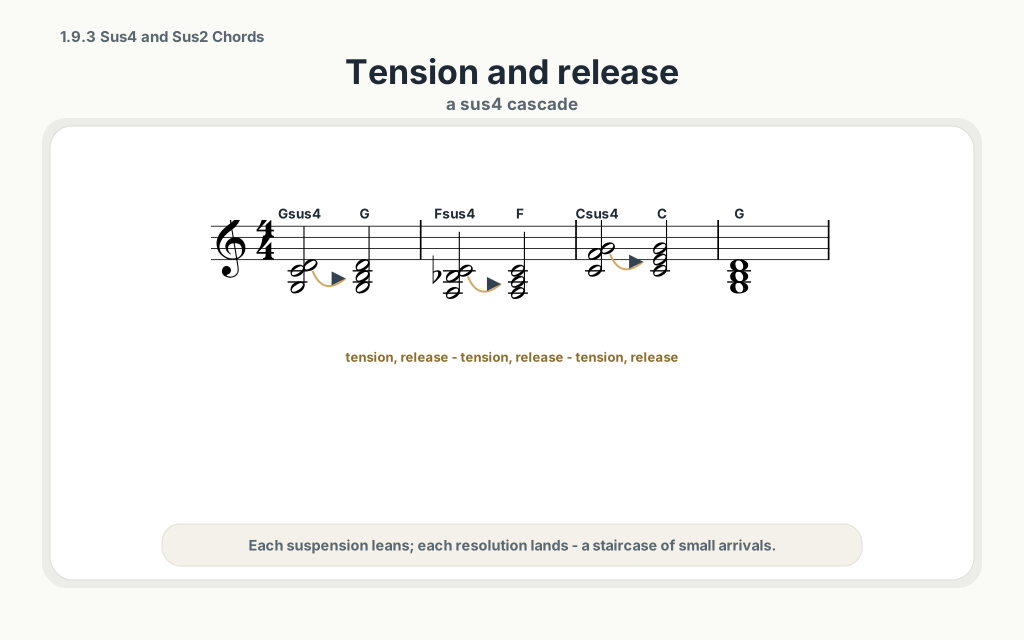
The sus2 chord replaces the third with the major second. In C: C–D–G. The D could rise by a whole step to E, making a major triad, or rise by a semitone to E♭, making a minor triad. Both sus chords omit the third while placing a second or fourth nearby. In some contexts that nearby third creates audible expectation; in others, the sus chord is a stable colour rather than a delayed event.
1.9.4Chord Symbols and Roman Numerals
We are about to leave the fundamentals behind and enter a world where chords move - where they follow each other in sequences that create narrative, tension, release, surprise, and satisfaction. Before we go, we need two systems for talking about those movements.
Chord symbols are the practical language: C, Am, G7, Fsus4. A symbol identifies the chord’s root and quality and can specify extensions, alterations, or a bass note, while leaving voicing, register, doubling, spacing, and instrumentation to the player. Chord symbols are immediate and specific about harmonic identity, not an exact set of keystrokes.
Roman numerals are the analytical language. Instead of naming a specific chord, they describe a chord’s position within a key and its relationship to the tonic. A I chord is built on the first degree of the scale. A IV chord is built on the fourth. A vi chord is built on the sixth. Uppercase numerals indicate major; lowercase indicate minor. A small circle marks diminished (vii°); a plus sign marks augmented (III+).
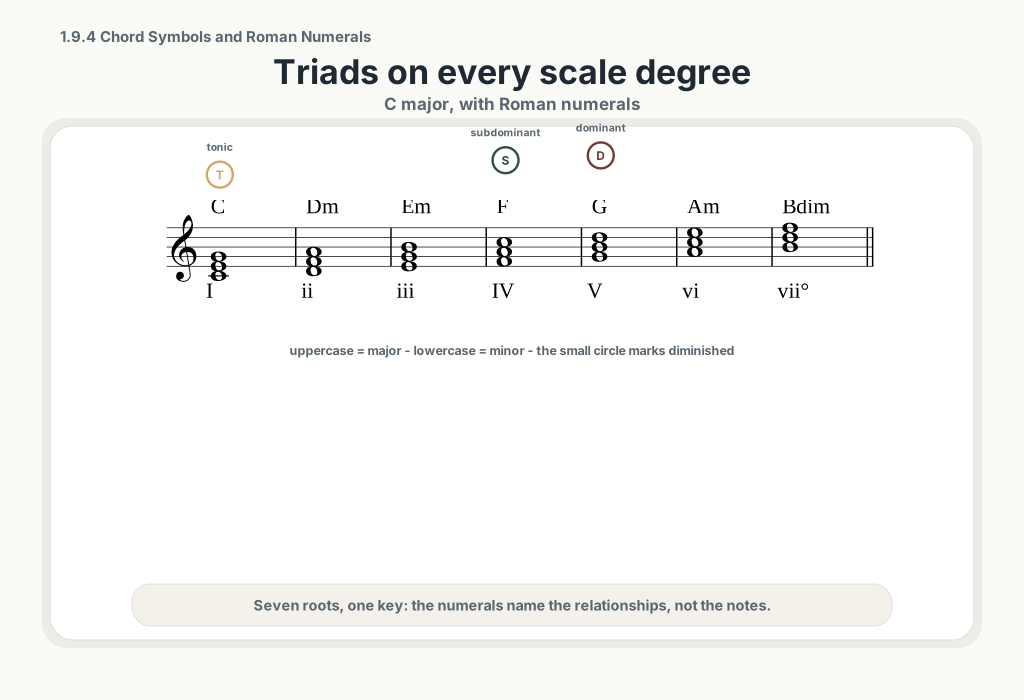
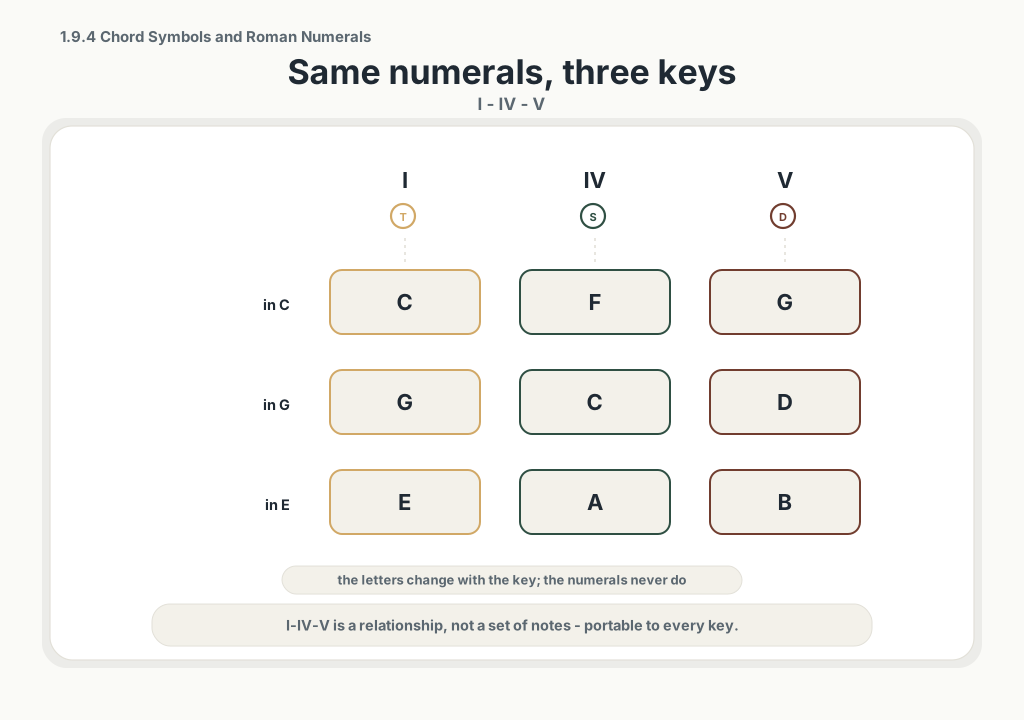
The power of Roman numerals is abstraction. When you say “I–IV–V,” you are describing a relationship that is the same in every key. C–F–G in C major. G–C–D in G major. E–A–B in E major. The specific pitches change; the functional relationship does not. Roman numerals let you see through the surface to the underlying logic, the way an X-ray lets you see through skin to bone. When you can hear a progression and think “that’s a I–vi–IV–V,” you are not just identifying chords. You are hearing the grammar of the music - the relationships, the tensions, the expectations that make one chord want to move to another.
We will use both systems throughout this book, because each reveals something the other does not. Chord symbols tell you what. Roman numerals tell you why. And the why, as we are about to discover, is where the real story begins.
The Traveller
“A triad is three notes. A Roman numeral is a triad’s address. Learn the address, and you can find your way through any key in any song.”
This is the end of the beginning. You know the notes, the scales, the intervals, the rhythms, the textures, the chords. You have the vocabulary. Now - in Unit II - we learn the grammar. The chords begin to move. And when chords move, they tell stories.