1.5.1Simple Intervals: Size and Quality
You now know what notes are and where they live on the staff. You know what scales are and how they are built. But there is a question we have been circling without quite asking: what is the distance between two notes, and why does that distance matter?
The answer is the interval - the measurement of distance between two pitches. If notes are the atoms of music, intervals are the forces between them. Two notes a half step apart create a very different sensation than two notes a fifth apart. The distance changes the colour, the tension, the emotional gravity of what you hear. Learning to identify intervals is learning to hear the relationships inside music, not just the individual sounds - and it is those relationships, more than any single note, that make music mean something.
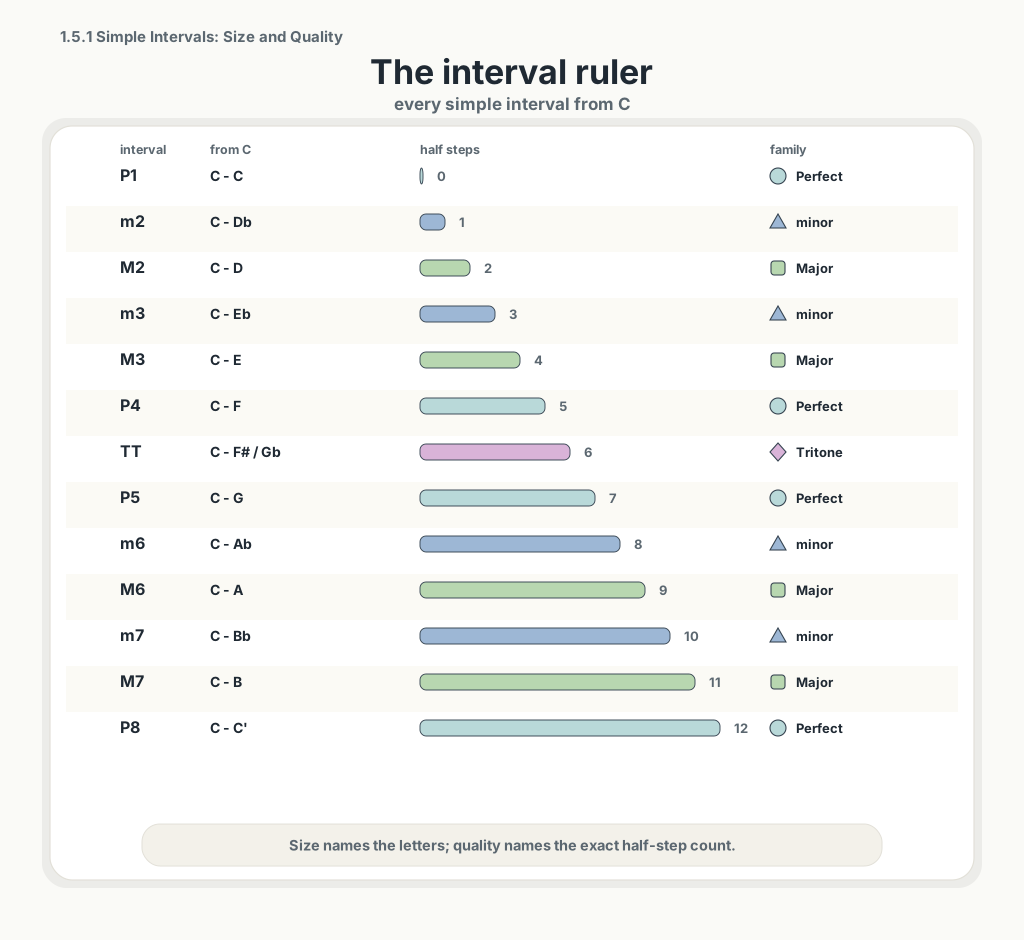
Measuring an interval requires two pieces of information: a size and a quality. The size is a number; the quality is an adjective that refines it. Together, they give you a precise measurement of the distance between any two notes in the system.
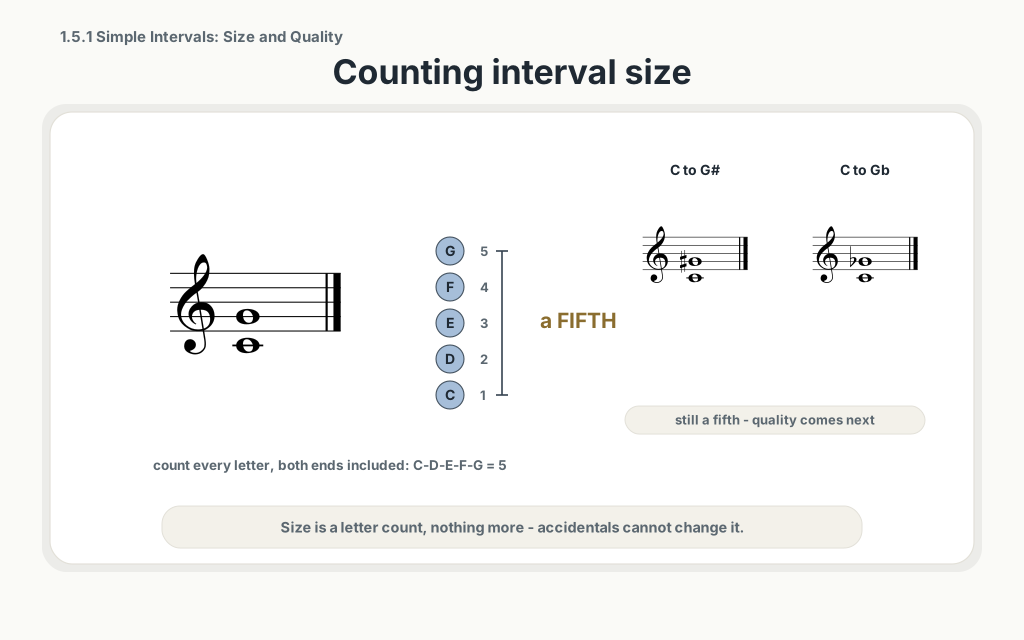
Size is found by counting. Start on the lower note and count upward through the musical alphabet, including both the starting and ending notes. C to G: C (one), D (two), E (three), F (four), G (five). The interval is a fifth. It does not matter, for the purpose of size, whether any of these notes are sharp or flat. C to G♯ is still a fifth. C to G♭ is still a fifth. The number tells you how many letter names the interval spans; the quality will tell you the exact number of half steps.
Quality comes in several varieties, and this is where students often stumble - not because the system is complicated, but because it uses two different naming conventions depending on which intervals you are measuring.
Perfect intervals - the unison (1st), fourth (4th), fifth (5th), and octave (8th) - belong to their own category. They are called “perfect” for reasons rooted deep in the history of Western music: these were the intervals the medieval theorists considered most consonant, the most stable, the most godly. The word "perfect" here does not mean “best.” It means “complete” - these intervals have a purity, a hollow clarity, that other intervals do not. Strike a perfect fifth on a piano and you hear something that sounds almost elemental, like a natural phenomenon rather than a human choice. There is a reason the first leap in “Twinkle, Twinkle, Little Star” is a fifth, and the opening of the Star Wars theme is a fifth, and the opening power chord of a thousand rock songs is a fifth. It is the interval that sounds like certainty.
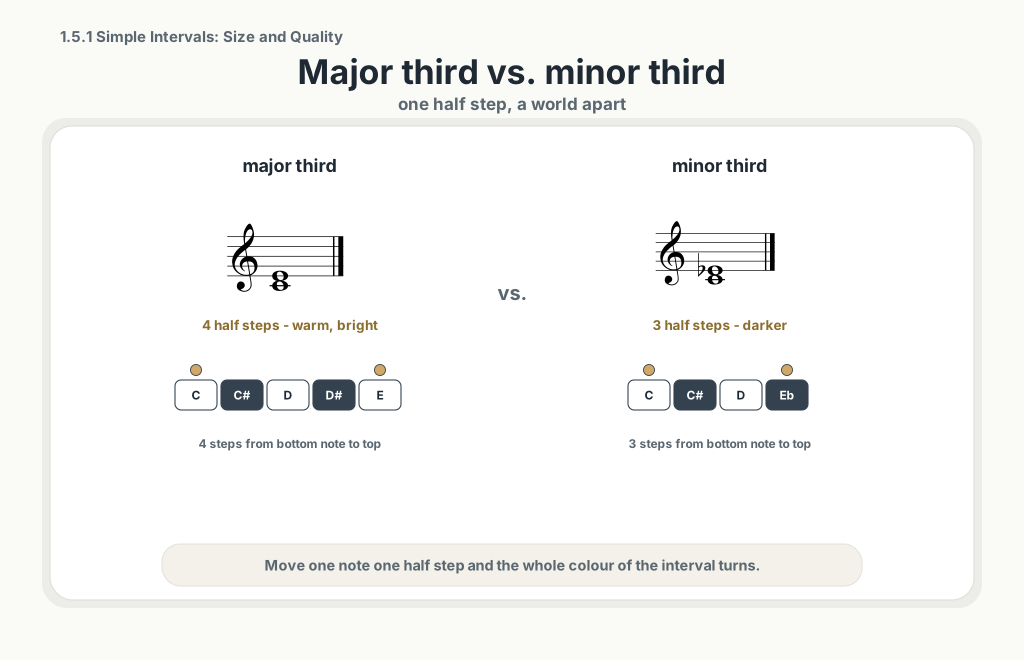
Major and minor intervals cover the seconds (2nds), thirds (3rds), sixths (6ths), and sevenths (7ths). A major interval is one half step larger than its minor counterpart. A major third - C to E - spans four half steps and sounds warm, bright, settled. A minor third - C to E♭ - spans three half steps and sounds darker, more complex, tinged with something harder to name. The difference between major and minor is just one half step, and yet the emotional distance is vast. This is one of music’s most astonishing facts: a single half-step alteration transforms the character of an entire sound.
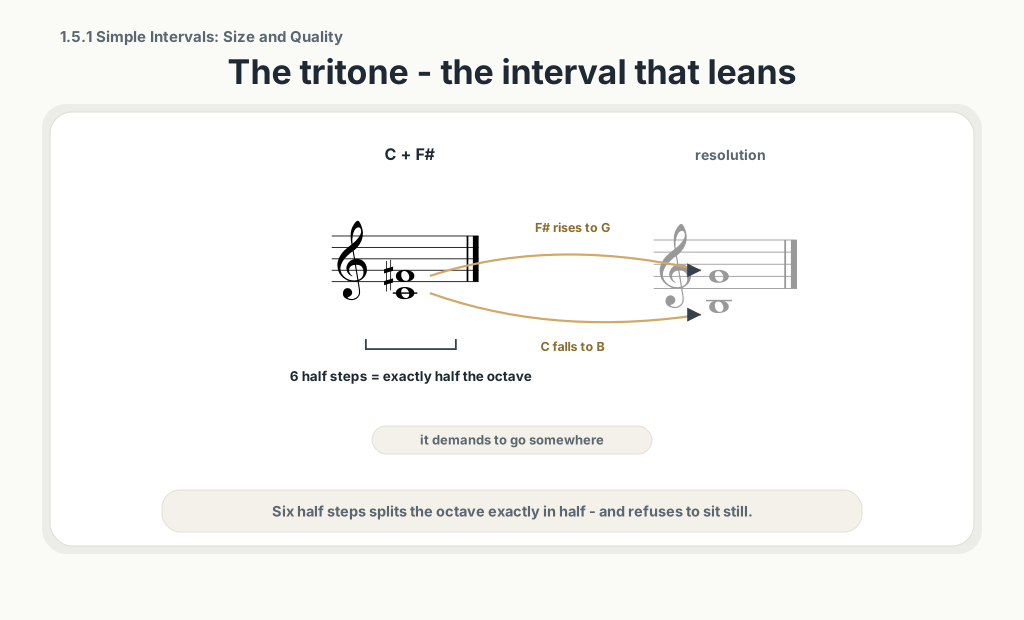
Two more qualities round out the system. An augmented interval is one half step larger than a perfect or major interval - stretched, widened, pulled a little past its natural boundary. A diminished interval is one half step smaller than a perfect or minor interval - compressed, tightened, squeezed until it becomes unstable. The most famous of these is the augmented fourth (or its enharmonic twin, the diminished fifth), which spans exactly six half steps - half the octave. This interval is called the tritone, and it is one of the most important sounds in all of Western music.
The tritone sounds restless. Unstable. Medieval theorists called it diabolus in musica - the devil in music - and while that nickname is more legend than historical fact, it captures something real about the interval’s character. The tritone does not want to stay where it is. It leans, it strains, it demands to go somewhere. That restlessness, as we will discover when we reach harmony, is the engine that drives chord progressions forward. It is the reason certain chords feel tense and others feel resolved. For now, just play a tritone - C to F♯ - and notice what your ear wants. It wants the interval to move. That desire is not in the notes. It is in you.
1.5.2Consonance and Dissonance
If intervals are the forces between notes, then consonance and dissonance describe the character of those forces - whether the two notes seem to be at peace with each other or at war.
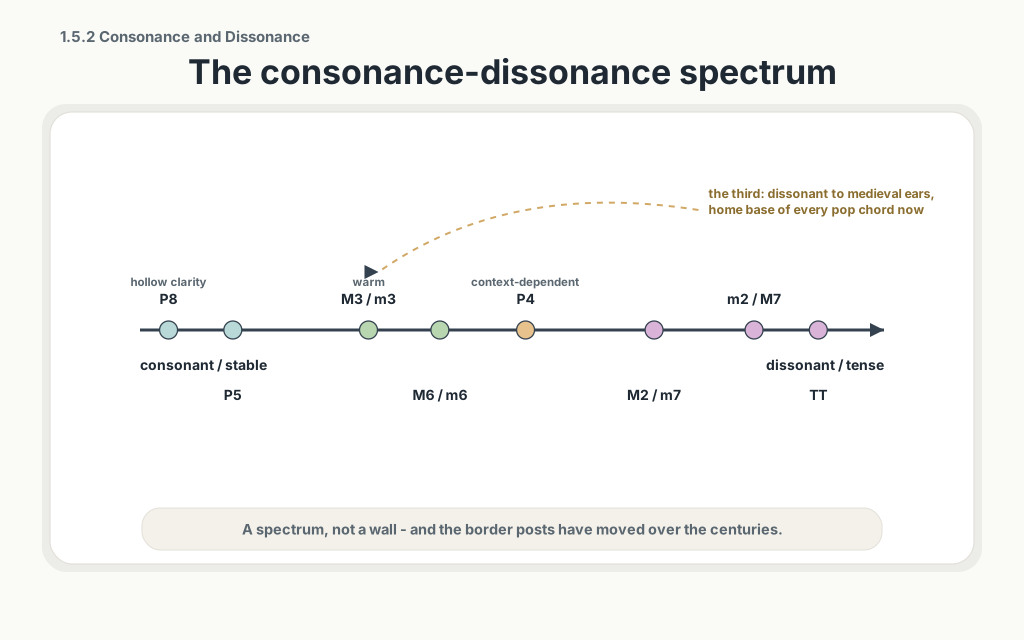
Consonance is stability. Two notes that sound consonant together feel resolved, complete, as though they could ring forever without demanding anything further. Perfect fifths and octaves are the most consonant intervals. Major and minor thirds and sixths are consonant too, though with more warmth and colour. Consonance is the sound of arrival.
Dissonance is tension. Two notes that sound dissonant together create a friction, a restlessness, a sense that something needs to happen. Seconds, sevenths, and tritones are dissonant. They lean against each other like two people sharing an armrest on a plane - the situation is tolerable, but nobody is comfortable, and everyone is waiting for it to change.
Here is the essential thing: dissonance is not a flaw. It is not “wrong” or “ugly” or “bad.” Dissonance is the tension that makes consonance meaningful. Without it, music would be a flat landscape of pleasant agreement - a long Sunday afternoon with no shadows. Dissonance creates the hills and valleys. It creates the story. Every piece of music you have ever loved uses dissonance, whether you noticed it or not. The ache in a minor seventh chord. The crunch of a distorted guitar. The way a singer’s note clashes against the chord beneath it for one delicious moment before resolving. These are all forms of dissonance, and they are what makes music feel alive.
The boundary between consonance and dissonance, it should be said, is not fixed. It has shifted throughout history. Intervals once treated as imperfect or contextually dissonant - thirds, for instance - later became the basis of common triadic harmony and countless pop chords. Jazz embraces seconds and sevenths as colours, not problems. A distorted power chord in a rock song can produce a wall of overtone-rich roughness that listeners experience as powerful: a texture to inhabit rather than a tension that must resolve. Consonance and dissonance are not only properties of physics. Roughness and harmonicity matter, but listeners’ learned expectations and style familiarity reshape what those signals mean. And expectations change.
1.5.3Compound Intervals and Inversion
Most of the intervals we have discussed so far fit within a single octave. But music does not always keep its distances tidy.
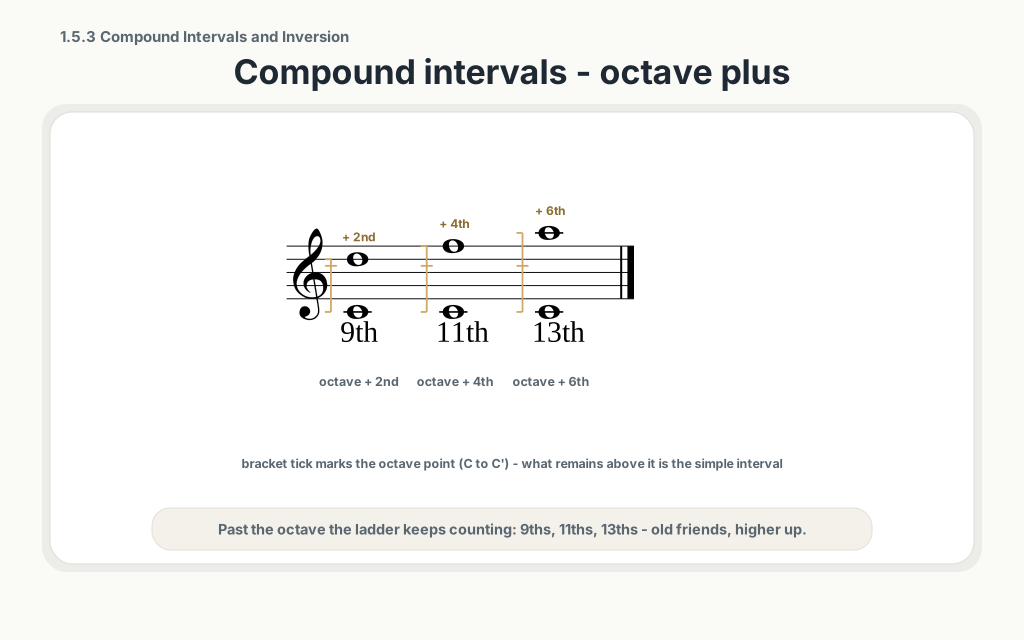
When an interval exceeds an octave, it becomes a compound interval. A ninth is an octave plus a second. An eleventh is an octave plus a fourth. A thirteenth is an octave plus a sixth. These extended intervals are the territory of jazz voicings and modern R&B harmony - the lush, spread-out chords that give songs by Erykah Badu or Jacob Collier their sense of spaciousness. We will encounter them again in Unit IV, when the harmonic palette widens.
For now, there is one more concept that belongs here: inversion. Take any interval and flip it - move the bottom note up an octave, or the top note down an octave. The interval changes, but it changes in a predictable way, governed by a simple rule:
The sizes always add up to nine. A second inverts to a seventh (2 + 7 = 9). A third inverts to a sixth (3 + 6 = 9). A fourth inverts to a fifth (4 + 5 = 9).
And the qualities trade places like mirror images. Major becomes minor. Minor becomes major. Augmented becomes diminished. Diminished becomes augmented. Perfect - true to its name - stays perfect.
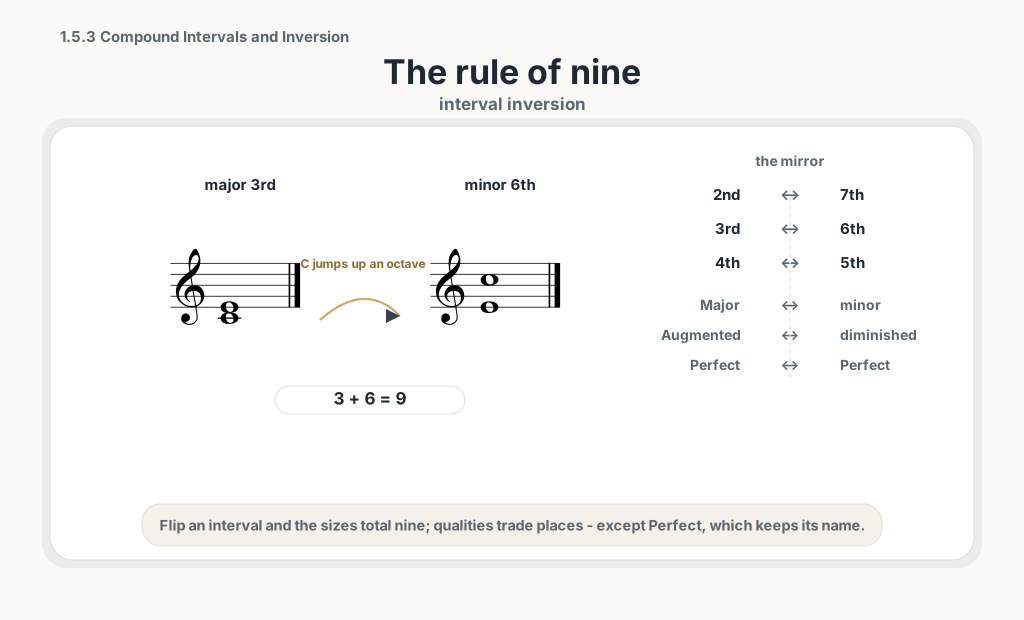
This means that a major third (C up to E) and a minor sixth (E up to C) are two views of the same relationship - the same two notes, seen from different directions. Inversion reveals the symmetry hiding inside the interval system. And symmetry, in music as in mathematics, is always worth paying attention to. It has a way of turning up again when you least expect it.
The Traveller
“Two notes. That is all an interval is. But the distance between them - that tiny space - contains the whole argument of the music. Learn to hear it, and you hear everything.”
You can measure the rungs now. Next: what happens when beats and measures get more complicated.