“I am a melody, I am a melody, I am a melody.”
- A melody, insisting upon itself
2.2.1Introduction: The Line Through Space
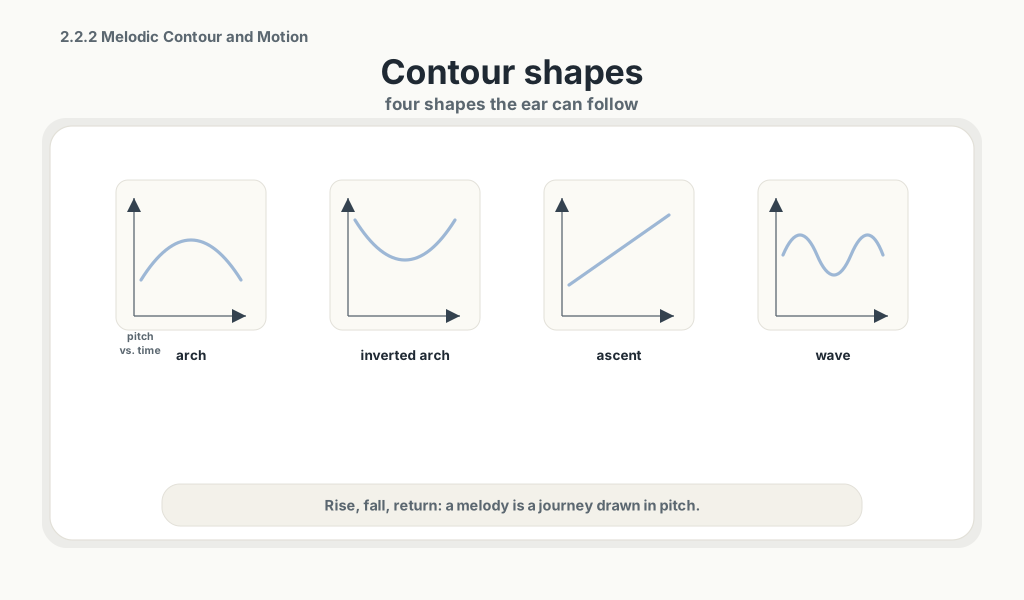
If harmony is the gravitational field that pulls music together, melody is the object moving through that field. It is the part of a song that listeners remember first, the line that carries the emotional identity of the piece, and the primary vehicle for the lyric. At its most basic level, a melody combines pitch and rhythm into a singable line. A strong melody usually has a clear contour, meaning it rises and falls in a shape the ear can follow, and it often feels like a complete musical statement with a sense of arrival or rest.
In pop music, melody is usually less about long, complex development and more about immediate impact. Classical or art-song melody may unfold over larger spans, but pop usually aims for fast recognition, emotional clarity, and repeatability. This is why pop writers often focus on hook placement, chorus lift, and melodic simplicity rather than complexity for its own sake.
The Sage
“A melody is a line drawn in the air. Harmony is the air itself.”
We are planting a seed here - this concept of melodic simplicity and memorability will become the engine of Chapter 4.8 when we discuss advanced form and the structural role of the hook.
2.2.2Melodic Contour and Motion
Melodies vary by how they move from note to note. This movement is called motion, and it generally falls into two categories:
- Conjunct motion moves mostly by step (from one scale degree to the adjacent one). It is generally smooth, easy to sing, and conversational.
- Disjunct motion uses larger leaps. It can add character, surprise, or emotional intensity.
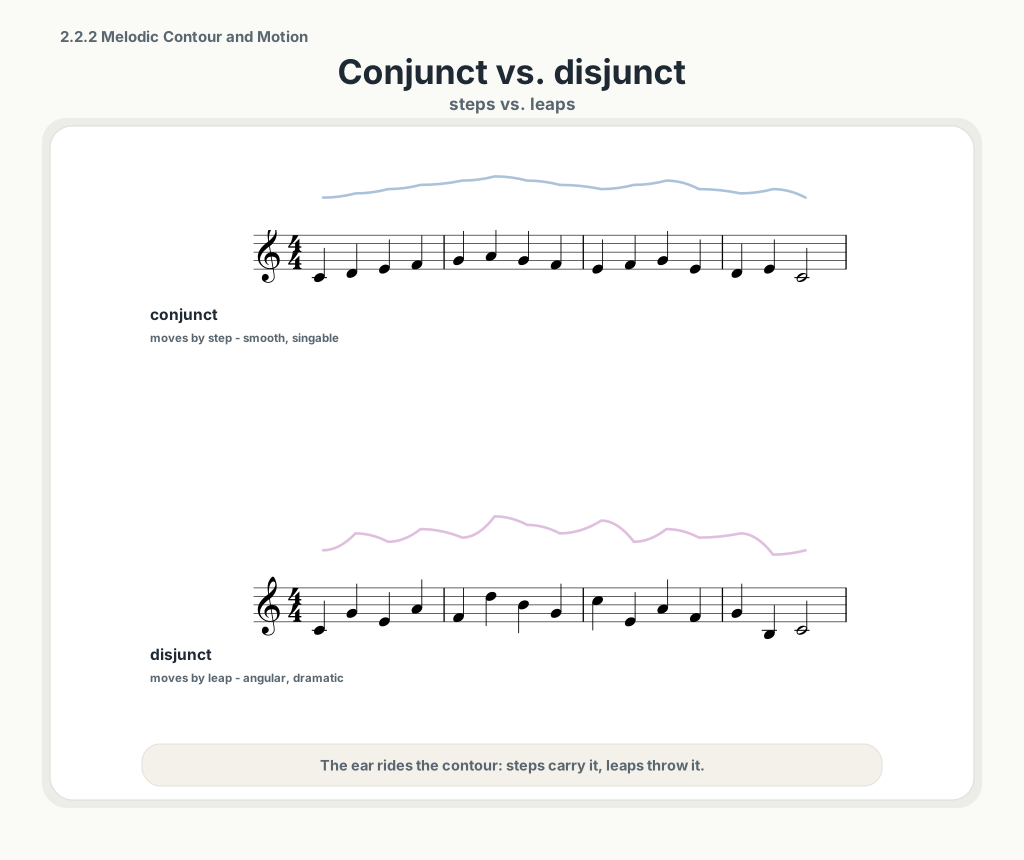
Most vocal melodies lean heavily toward stepwise (conjunct) motion, with occasional leaps to create interest, climax, and memorability. For example, Over the Rainbow uses a massive ascending octave leap to express aspiration and reaching for something better, while “Somewhere” (from West Side Story) uses a large leap where the specific interval and the descending second half of the motive express a more tragic longing. In a more contemporary context, Billie Eilish’s Bad Guy relies almost entirely on tight, conjunct motion to create its claustrophobic, whispered intensity, while Adele’s Someone Like You uses carefully placed disjunct leaps to deliver its emotional payload in the chorus.
Prof. Krankenhorn
“I must protest this obsession with ‘hooks’. A proper melody develops organically over fifty measures. It does not repeat the same three notes while someone shouts ‘yeah’.”
The Jester
“Tell that to Beethoven’s Fifth, Professor.”
2.2.3The Motif: The Musical Word
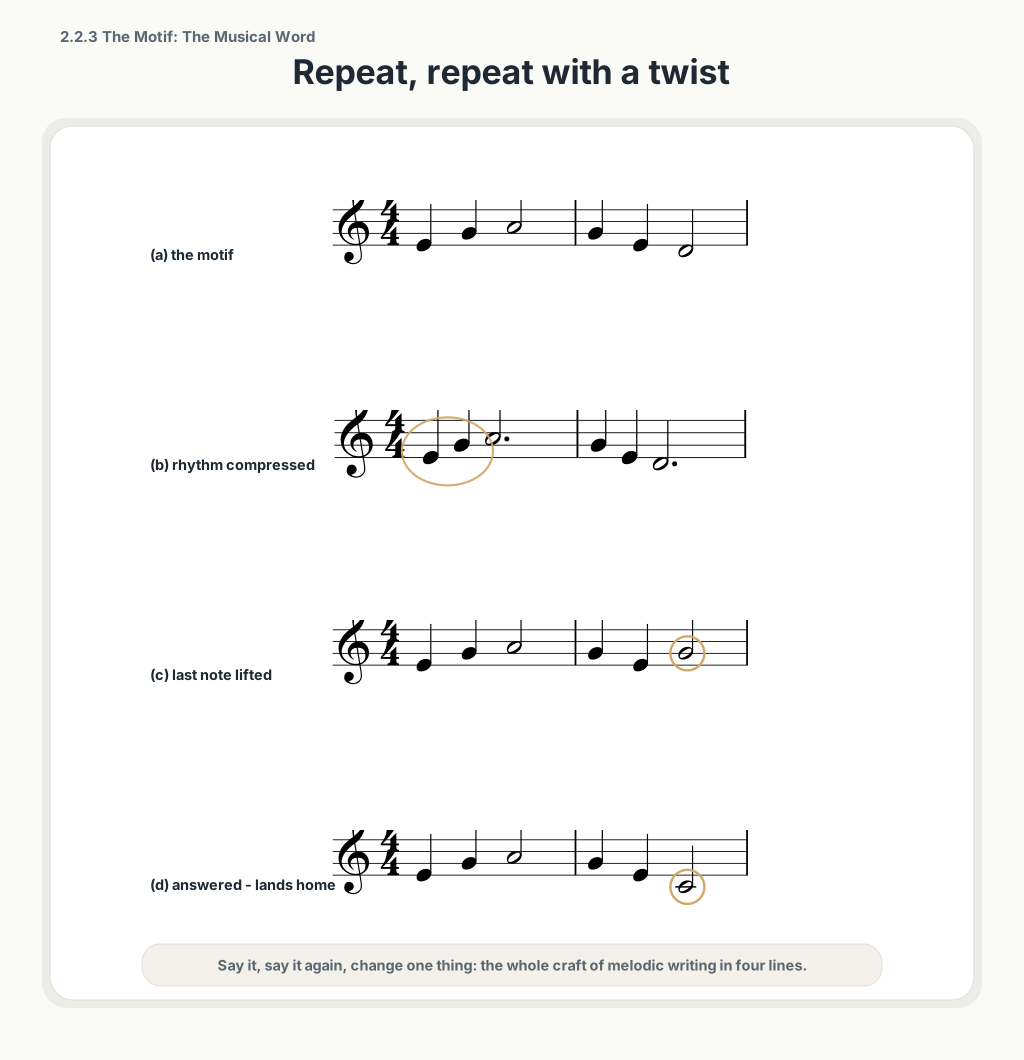
Pop melody writing often starts with a short motif - a tiny melodic idea that acts as the smallest building block of a melody, much like a “musical word.” Songwriters repeat and develop this motif across a verse or chorus by changing the rhythm, shifting the last note, or answering it with a second phrase. This ensures the line feels familiar but not monotonous.
A useful pattern is “repeat, repeat with a twist.” Repetition helps the ear lock in, but pure repetition can become boring. By changing one small thing the second time - a note, a rhythm, or the ending of the phrase - the songwriter maintains interest. For instrumental pop hooks, Smoke on the Water by Deep Purple is a classic example of a short, instantly recognizable melodic riff. In modern pop, the synthesized brass hook in Shakira’s “Hips Don’t Lie” or the drop melody in Rihanna’s “We Found Love” (ft. Calvin Harris) serve the exact same motivic function.
The Craftsman
“Don’t overcomplicate it. Find a good motif. Play it. Play it again. Play it slightly differently. Go home.”
2.2.4Phrase Structure and Period Forms
If a motif is a musical word, a phrase is a musical sentence. Phrases often work in pairs to create a larger structure called a period.
- The antecedent phrase acts as a question. It usually ends on a note or chord that feels unresolved (often the dominant), creating tension.
- The consequent phrase acts as the answer. It usually ends on a note or chord that feels resolved (often the tonic), providing closure.
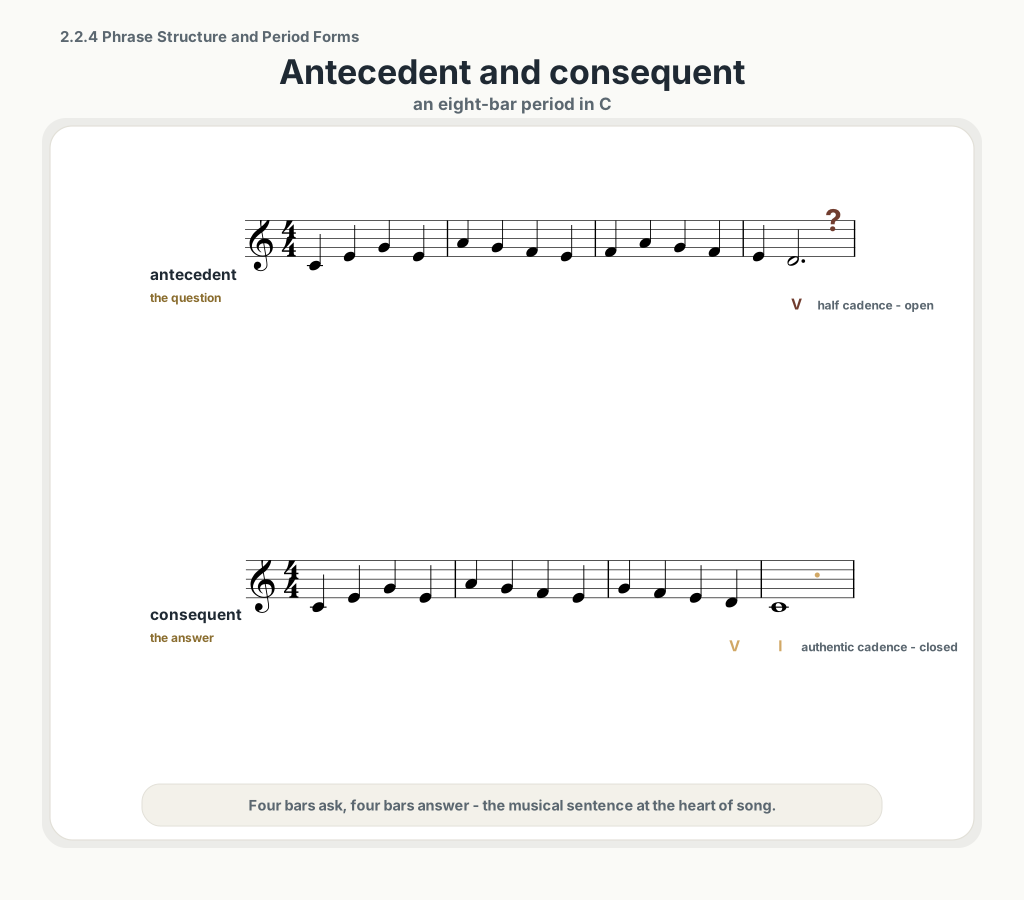
This structure mirrors the natural rhythm of spoken language, where a rising inflection indicates a question and a falling inflection indicates a statement. In songwriting, the melody should support the emotional meaning of the words. If the lyric is intimate, the melody may stay close and restrained; if the lyric is triumphant, the melody can expand upward and become more anthemic.
Recall the triads and chord types we explored in Chapter 1.9 - the relationship between the half cadence (the question) and the authentic cadence (the answer), which we will formalize in Chapter 2.3, now reveals its full significance as the architectural foundation of melodic phrasing.
2.2.5Contrast: Verse vs. Chorus
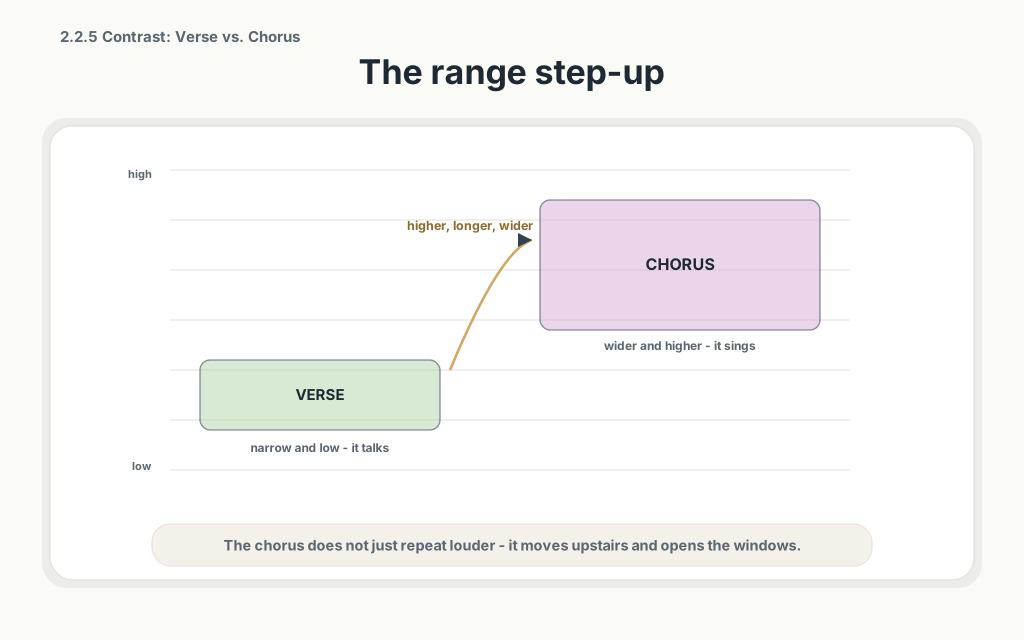
A common pop approach is to make the chorus more expansive than the verse. The verse should be interesting, but it should not compete with the chorus. A strong verse melody is usually narrower, more speech-like, and less climactic, creating space for the chorus to land with more force. Think of the verse as narration and the chorus as release.
When the chorus arrives, it often features:
- A higher overall range.
- Longer notes or wider leaps.
- A more regular rhythmic pulse.
- Repeated rhythmic patterns that emphasize the title phrase.
For example, a verse might use a narrow, speech-like melody on adjacent notes, then the chorus may open into a higher, longer phrase with a stronger rhythmic pulse. That contrast helps the chorus feel more memorable even if the harmony underneath stays similar. Consider Since U Been Gone by Kelly Clarkson or Living On A Prayer by Bon Jovi - both rely on a massive step-up in melodic range and rhythmic sustain to make the chorus explode out of the verse.
The Traveller
“I once heard a folk singer in the Appalachians who never changed chords. The whole song was just one drone. But when he hit the chorus, his voice leaped an octave and the hair on my arms stood up. Melody doesn’t need harmony to break your heart.”
2.2.6Musical Stress and Prosody
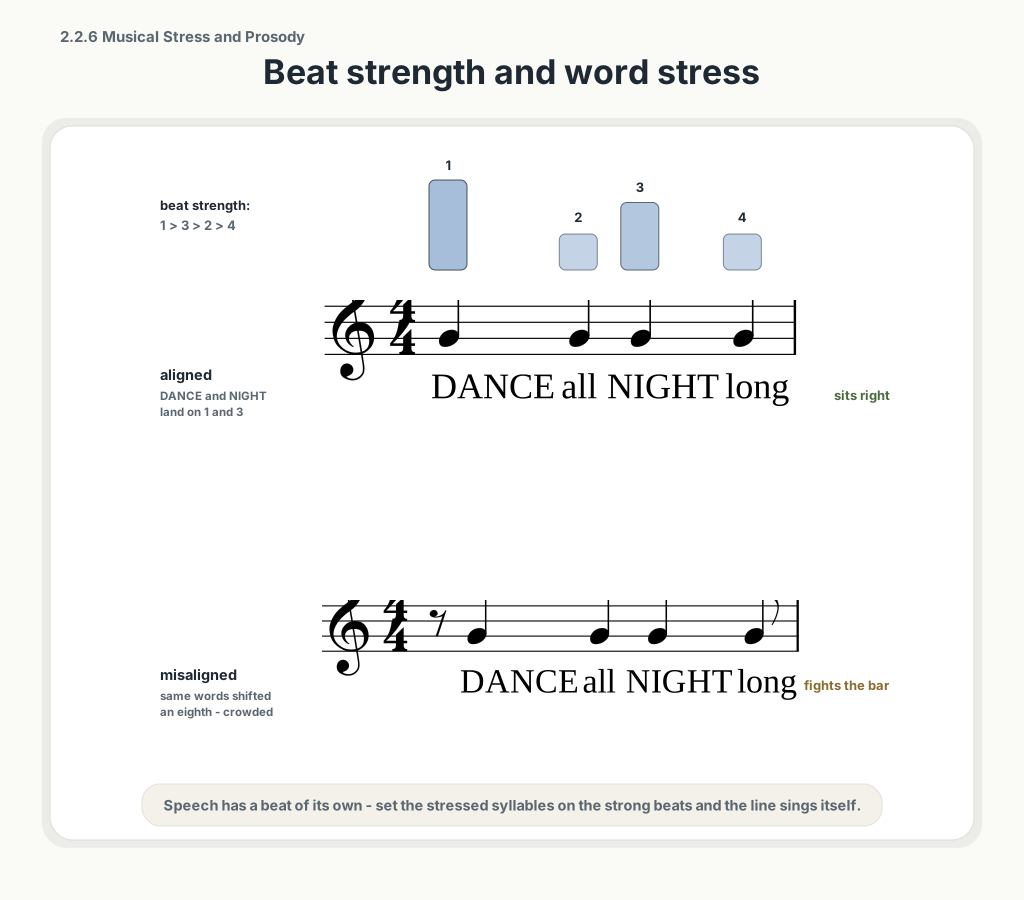
Prosody is the relationship between natural word stress and musical stress. In a common metrical reading of 4/4, beat 1 is strongest and beat 3 carries secondary weight, though groove and backbeat can strongly accent beats 2 and 4. As a useful default, prominent words and syllables often align with musical accents, while unstressed function words often receive less weight. Songwriters can deliberately displace that alignment for syncopation, flow, or expressive friction.
When writing a verse, a lyricist is juggling four variables: the number of phrases, the length of each phrase, the rhythmic profile, and the rhyme scheme. Like a happily married couple, lyric phrases and musical phrases should match. This interplay gives hip-hop profound rhythmic and prosodic complexity, even when pitch variation is minimal.